
hypers: hyperspectral data structure, data analysis and machine learning
Last updated Nov 6, 2025
21
Stars
11
Forks
1
Issues
0
Stars/day
Attention Score
14
Topics
Language breakdown
No language data available.
▸ Files
click to expand
README
hypers



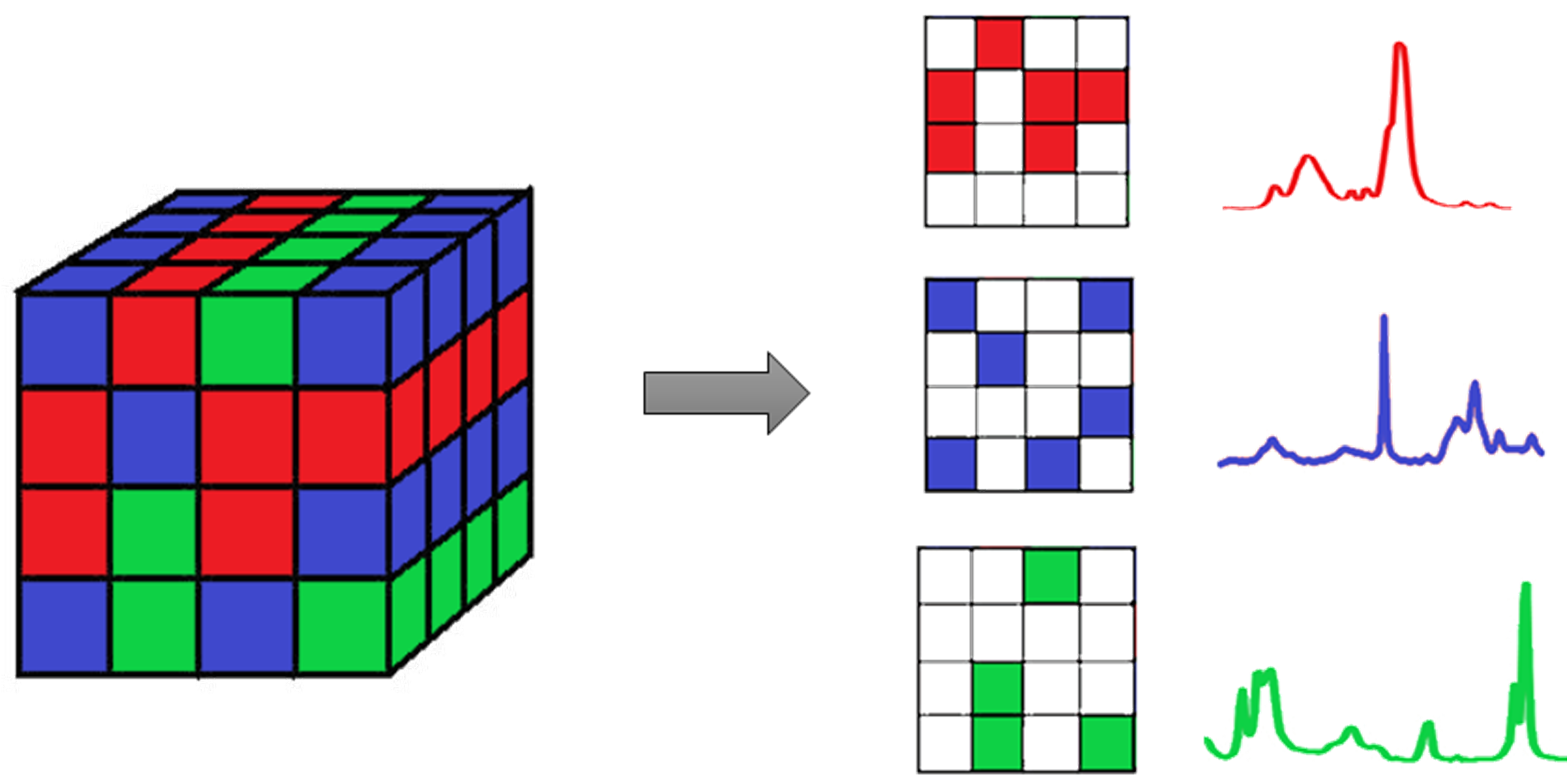
hypers provides a data structure in python for hyperspectral data. The data structure includes:
- Tools for processing and exploratory analysis of hyperspectral data
- Interactive hyperspectral viewer (using PyQt) that can be accessed as a method from the object
- Allows for unsupervised machine learning directly on the object
ndarray, and this package simply adds additional functionality that
allows for quick analysis of hyperspectral data. Importantly, this means that the object can still be used as a
normal numpy array.
[//]: <> (
**Please note that this package is currently in pre-release. It can still be used, however there is likely to be significant changes to the API. The first public release will be v0.1.0.**
Contents
Installation
To install usingpip:
pip install hypersThe following packages will also be installed:
- numpy
- scipy
- PyQt5
- pyqtgraph
Features
Features implemented in `hypers` include:
- Hyperspectral viewer
- Vertex component analysis
- Abundance mapping
Examples
Interactive viewer
The interactive viewer can be particularly helpful for exploring a completely new dataset for the first time to get a feel for the type of data you are working with. An example from a coherent anti-Stokes Raman (CARS) dataset is shown below: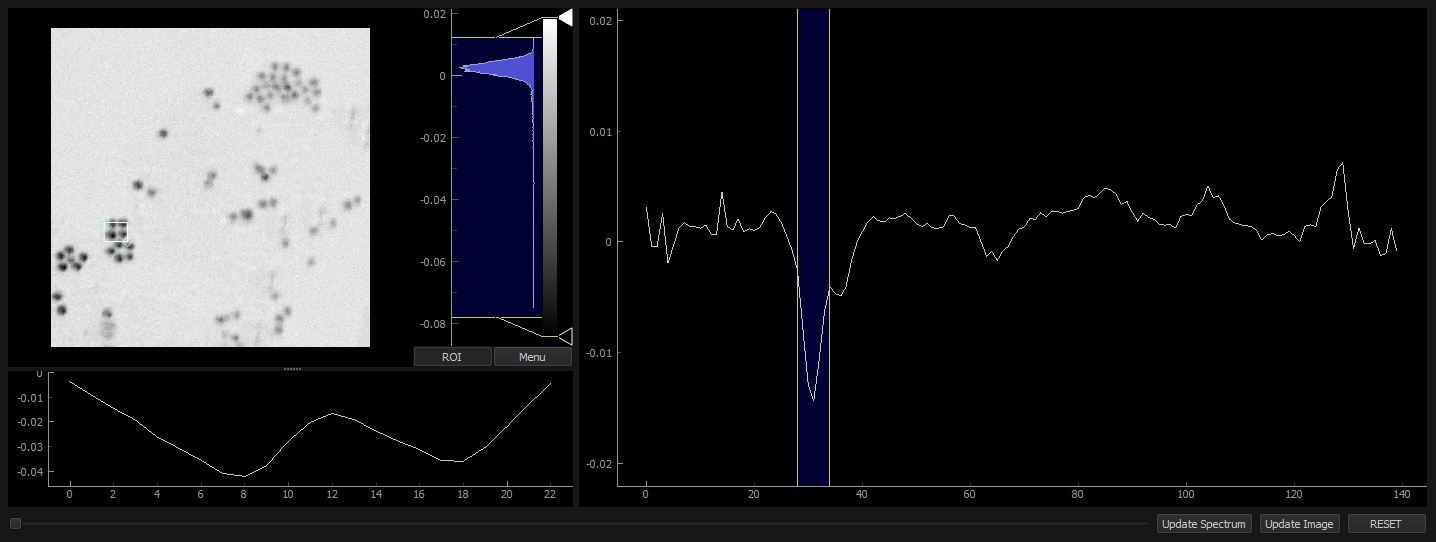
Documentation
The docs are hosted here.License
hypers is licensed under the OSI approved BSD 3-Clause License.References
- VCA algorithm


