
Framework for large distributed pipelines
Rain






Rain is an open-source distributed computational framework for processing of large-scale task-based pipelines.
Rain aims to lower the entry barrier to the world of distributed computing. Our intention is to provide a light yet robust distributed framework that features an intuitive Python API, straightforward installation and deployment with insightful monitoring on top.
Despite that this is an early release of Rain, it is a fully functional
project that can be used out-of-the box. Being aware that there is still
a lot that can be improved and added, we are looking for external
users and collaborators to help to move this work forward.
Talk to us online at Gitter or via email and let us know what your
projects and use-cases need, submit bugs or feature
requests at GitHub or even contribute with pull requests.
Features
- Dataflow programming. Computation in Rain is defined as a flow graph of
- Easy to use. Rain was designed to be easy to deployed anywhere, ranging
- Rust core, Python/C++/Rust API. Rain is written in Rust for safety and
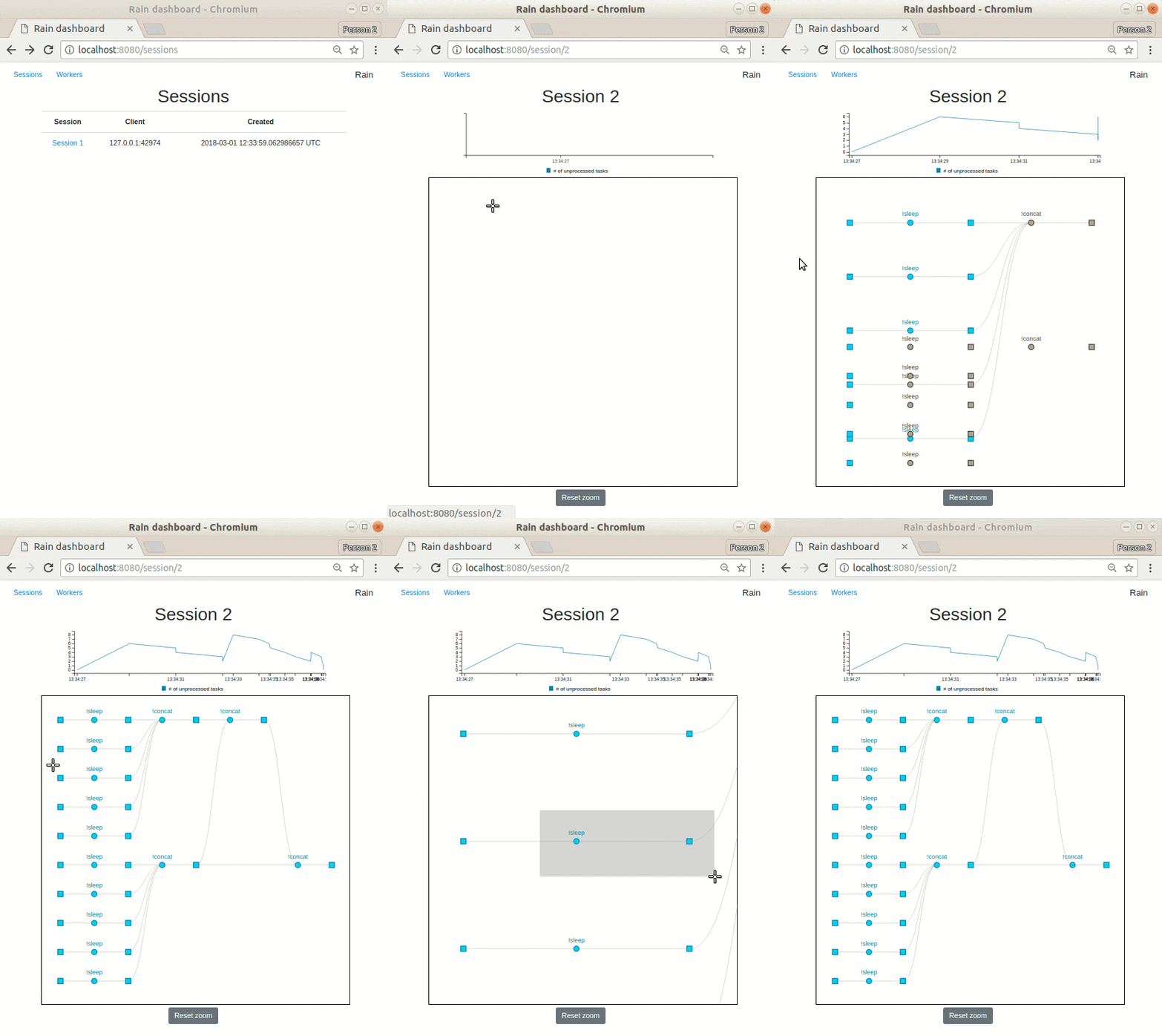
- Monitoring. Rain is designed to support both online and postmortem
Documentation
Overview • Quickstart • User guide • Python API • Examples
Quick start
- Download binary
$ wget https://github.com/substantic/rain/releases/download/v0.4.0/rain-v0.4.0-linux-x64.tar.xz
$ tar xvf rain-v0.4.0-linux-x64.tar.xz- Install Python API
$ pip3 install rain-python- Start server & a single local governor
$ ./rain-v0.4.0-linux-x64/rain start --simple- Rain "Hello world" in Python
from rain.client import Client, tasks, blob
client = Client("localhost", 7210)
with client.new_session() as session:     task = tasks.Concat((blob("Hello "), blob("world!")))     task.output.keep()     session.submit()     result = task.output.fetch().get_bytes()     print(result)
Installation via cargo
If you have installed Rust, you can install and start Rain as follows:
$ cargo install rain_server
$ pip3 install rain-python
$ rain start --simple
Read the docs for more examples.


