
🕹️ A diverse suite of scalable reinforcement learning environments in JAX







Environments | Installation | Quickstart | Training | Citation | Docs


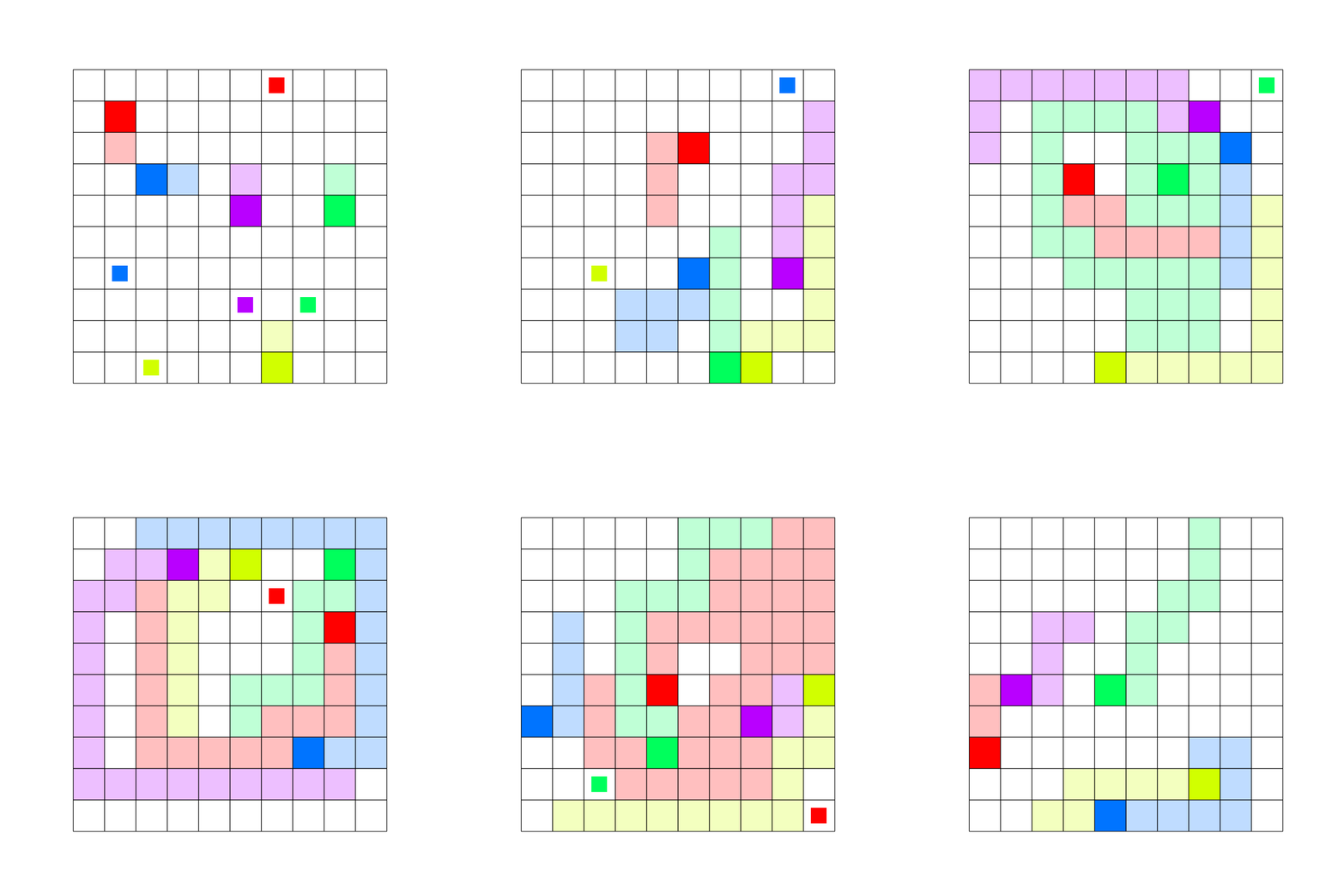
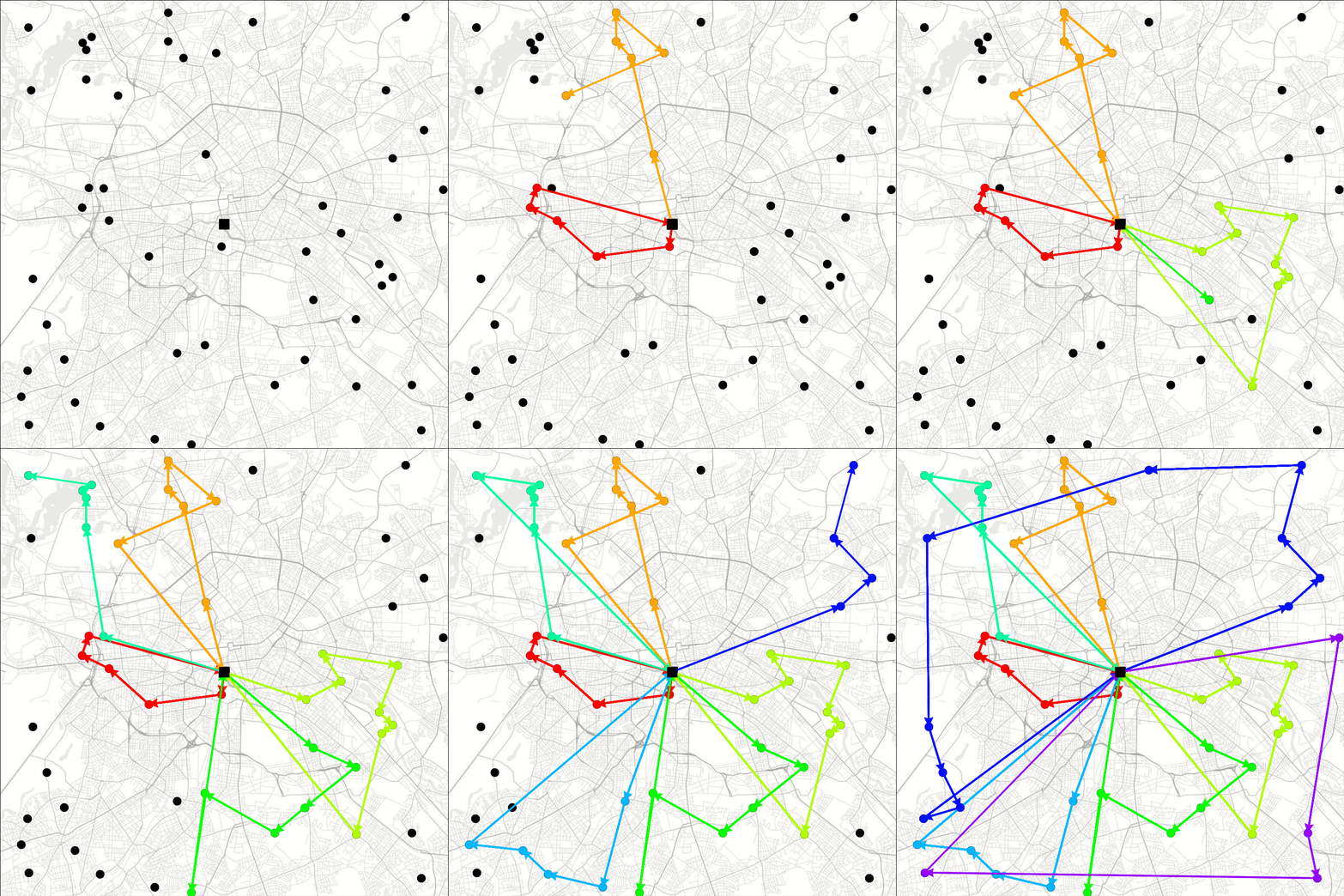


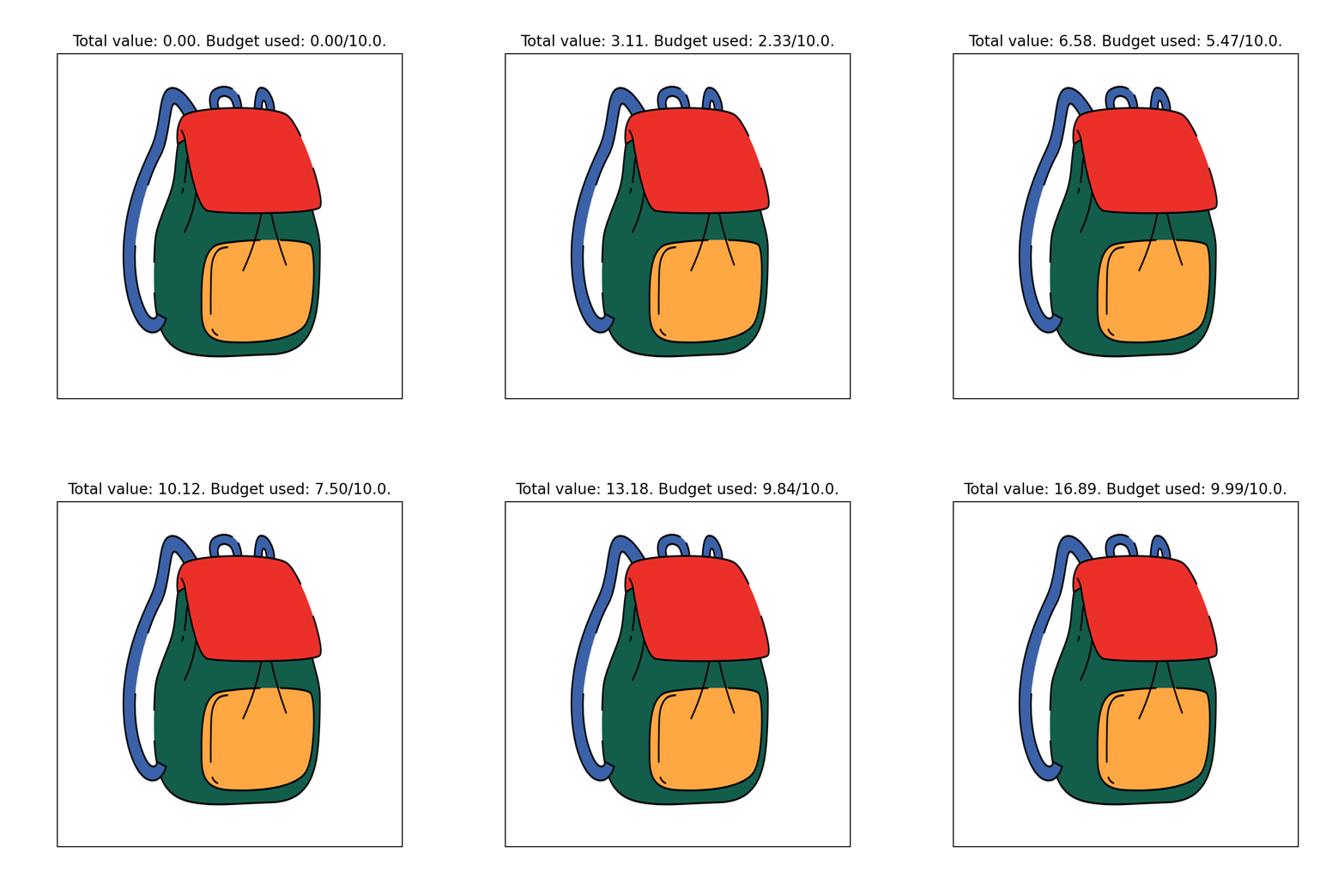

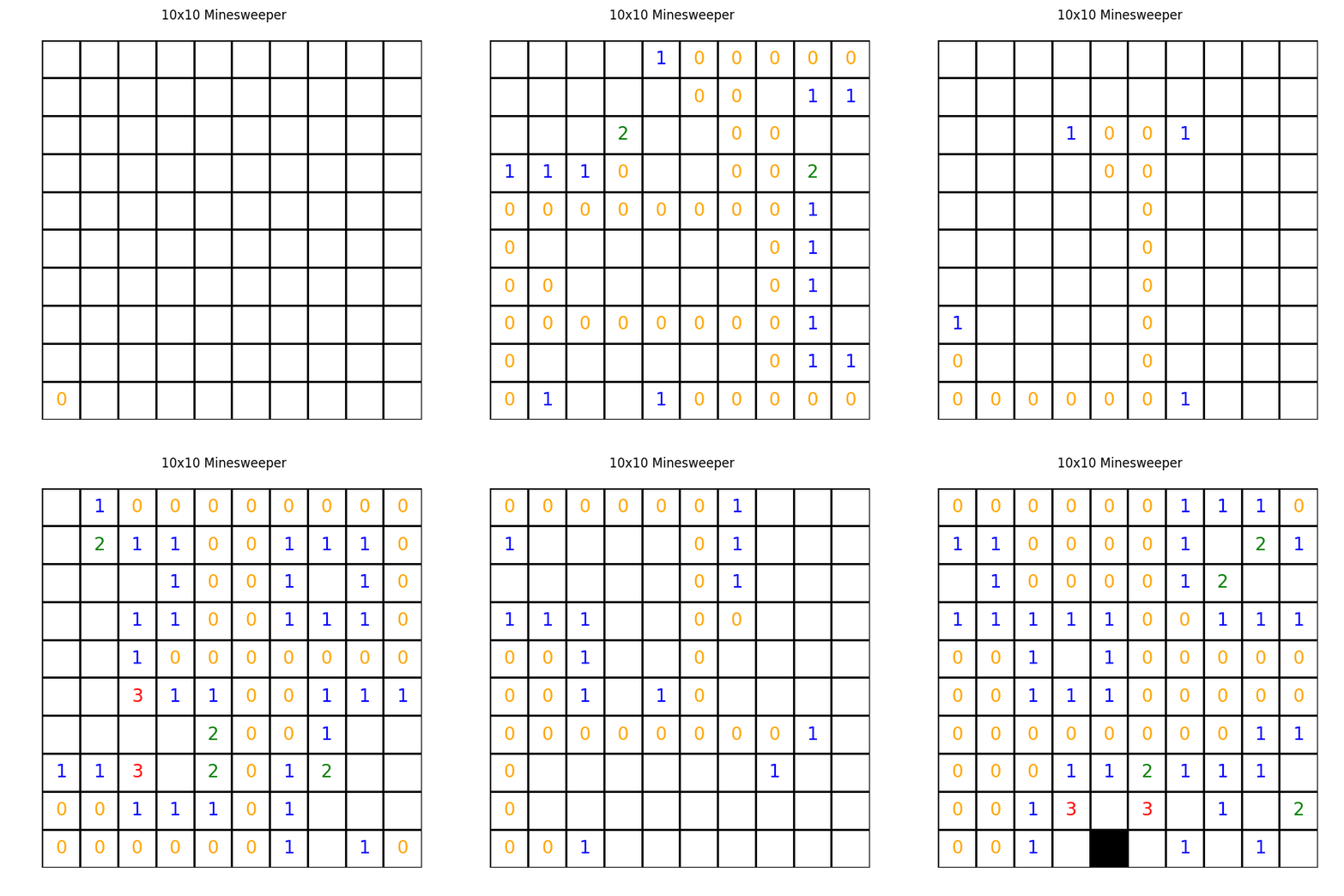



Jumanji @ ICLR 2024
Jumanji has been accepted at ICLR 2024, check out our research paper.
Welcome to the Jungle! 🌴
Jumanji is a diverse suite of scalable reinforcement learning environments written in JAX. It now features 22 environments!
Jumanji is helping pioneer a new wave of hardware-accelerated research and development in the field of RL. Jumanji's high-speed environments enable faster iteration and large-scale experimentation while simultaneously reducing complexity. Originating in the research team at InstaDeep, Jumanji is now developed jointly with the open-source community. To join us in these efforts, reach out, raise issues and read our contribution guidelines or just star 🌟 to stay up to date with the latest developments!
Goals 🚀
- Provide a simple, well-tested API for JAX-based environments.
- Make research in RL more accessible.
- Facilitate the research on RL for problems in the industry and help close the gap between
- Provide environments whose difficulty can be scaled to be arbitrarily hard.
Overview 🦜
- 🥑 Environment API: core abstractions for JAX-based environments.
- 🕹️ Environment Suite: a collection of RL environments ranging from simple games to NP-hard
- 🍬 Wrappers: easily connect to your favourite RL frameworks and libraries such as
dm_env and gym wrappers.
- 🎓 Examples: guides to facilitate Jumanji's adoption and highlight the added value of
- 🏎️ Training: example agents that can be used as inspiration for the agents one may implement
Environments 🌍
Jumanji provides a diverse range of environments ranging from simple games to NP-hard combinatorial problems.
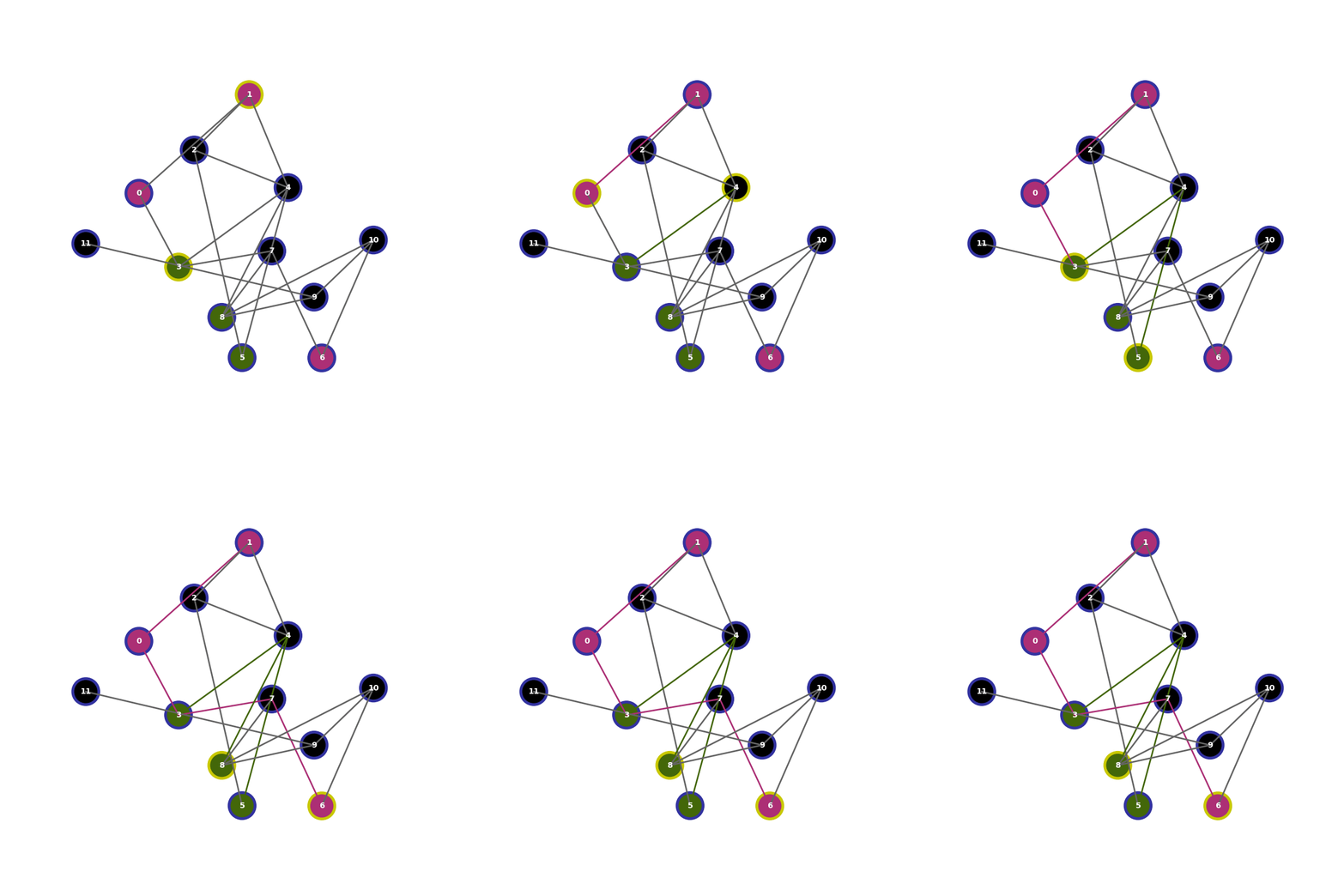
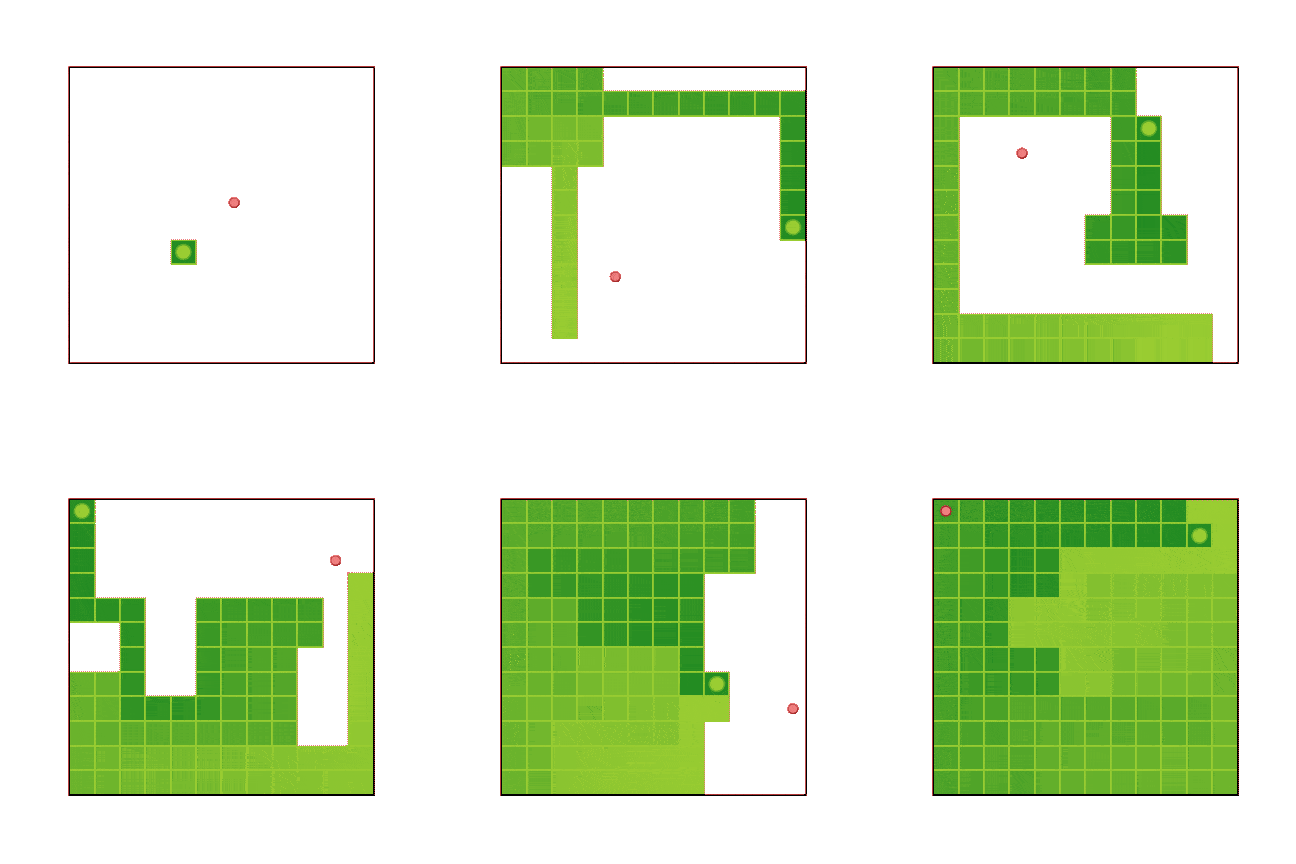
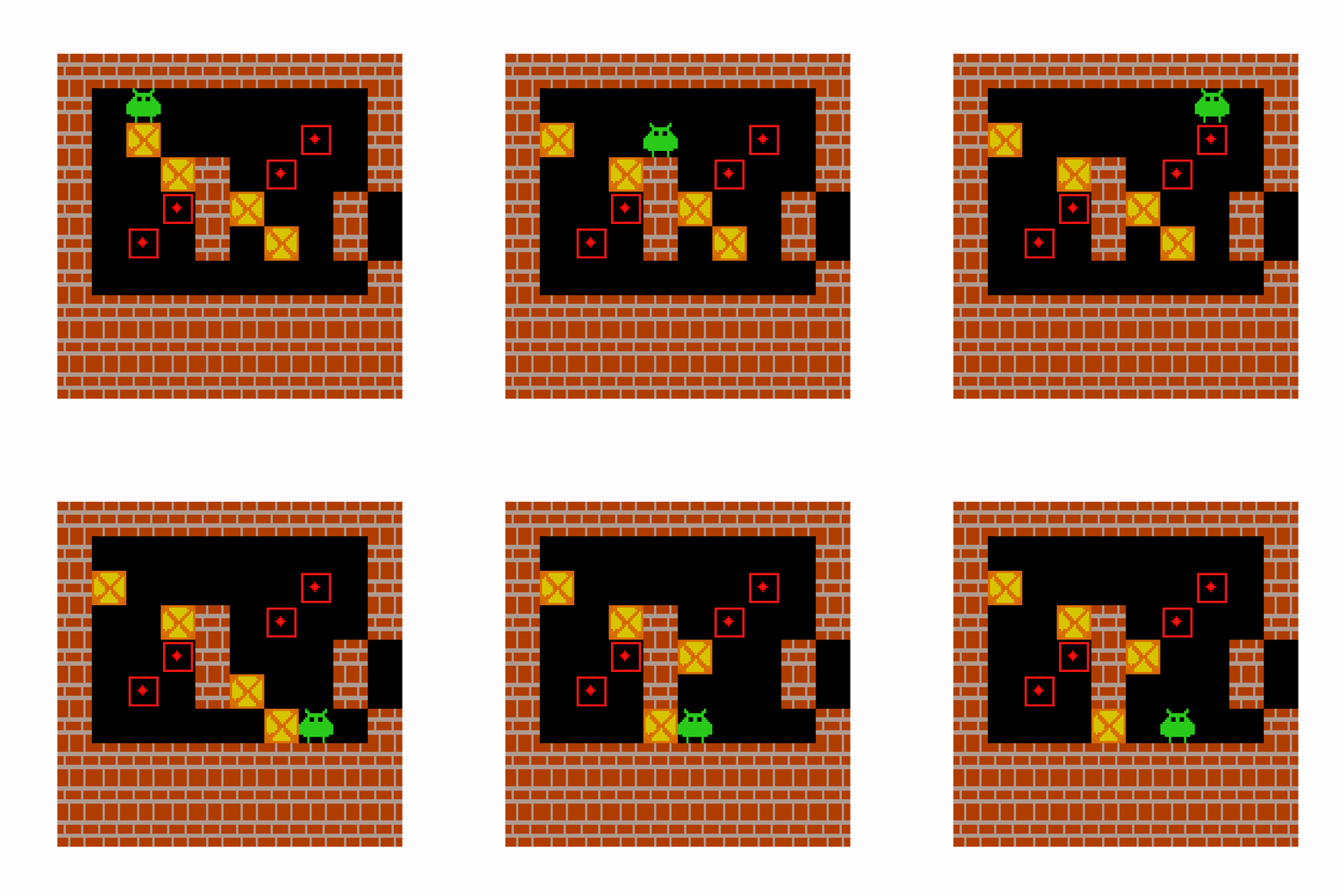
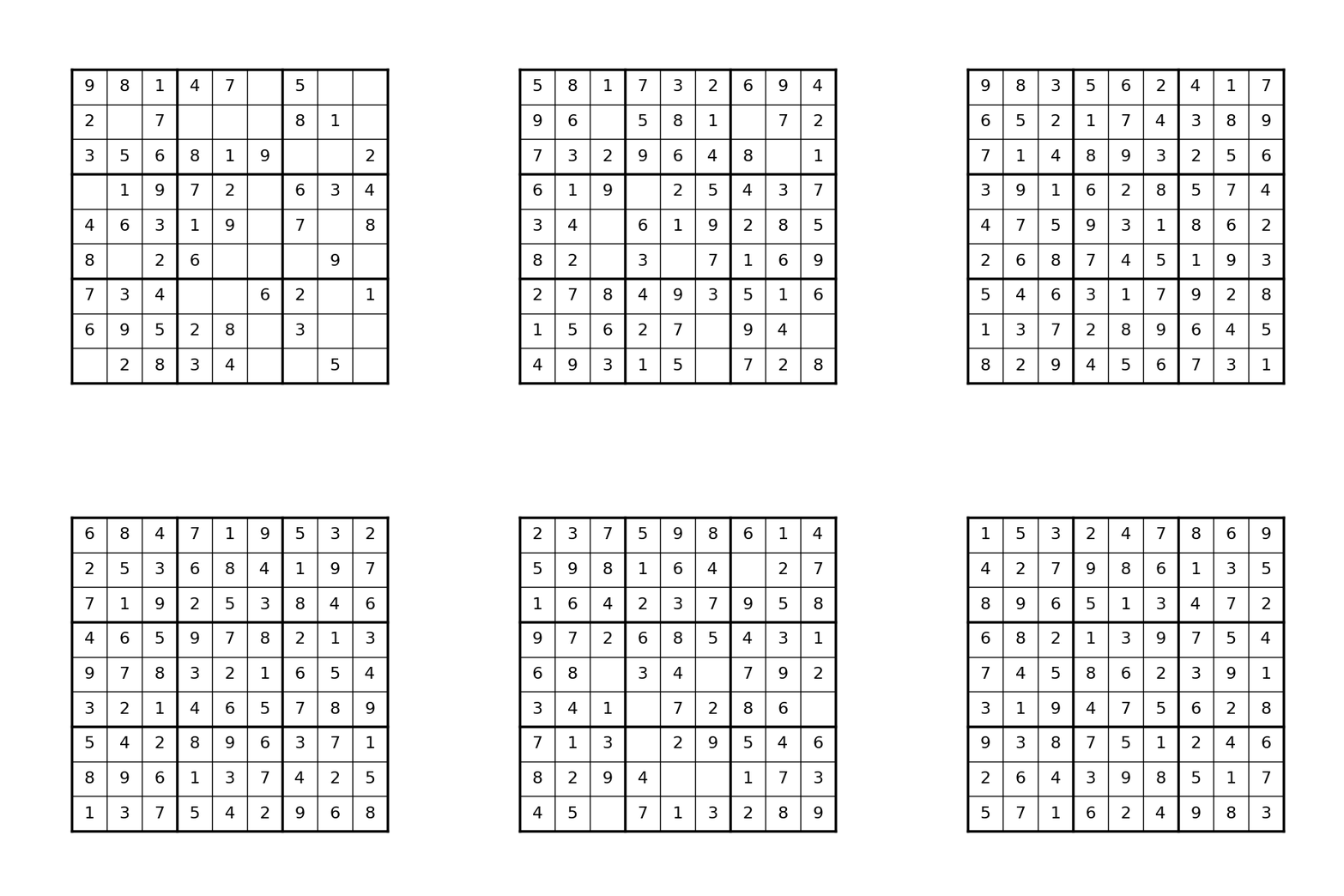
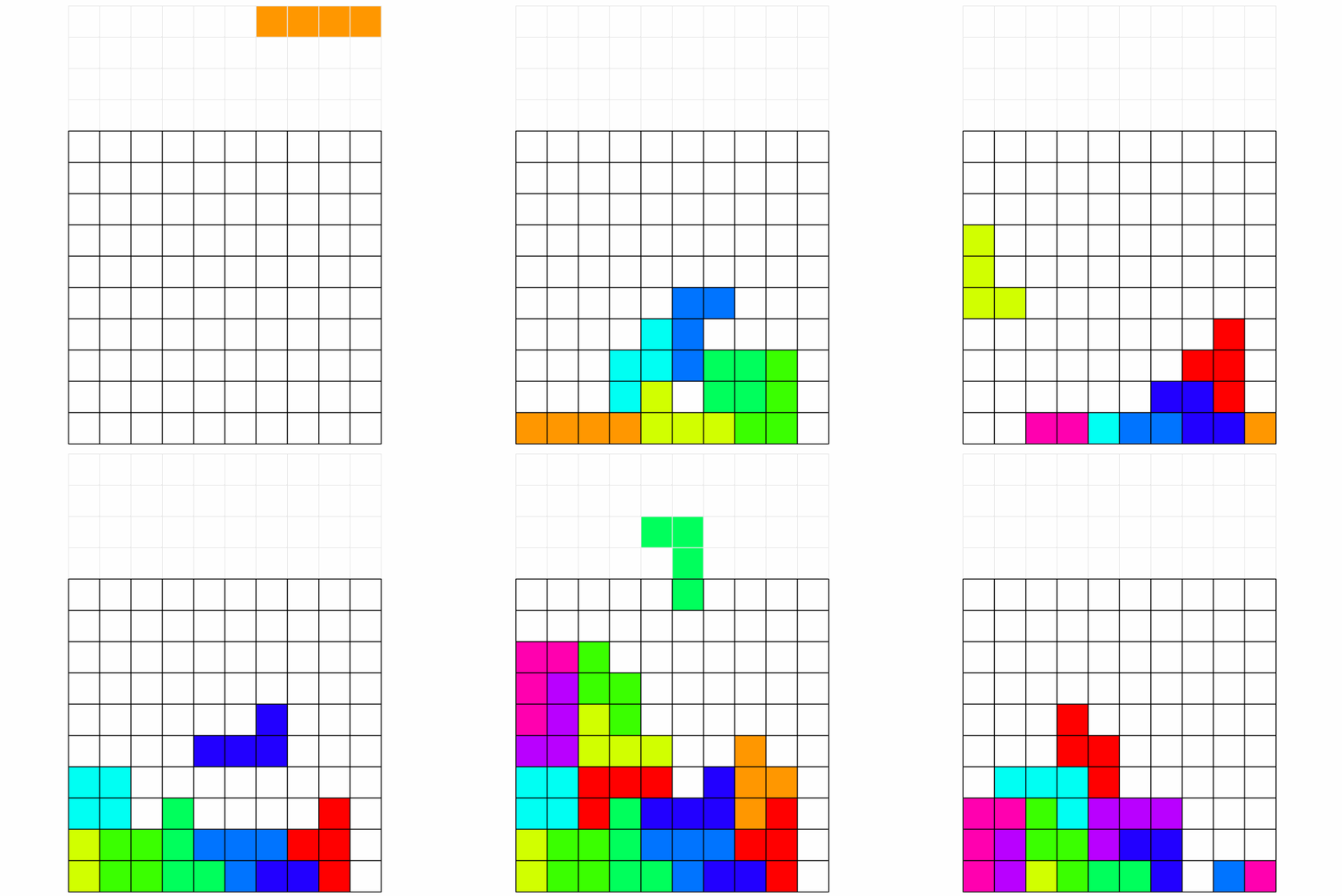
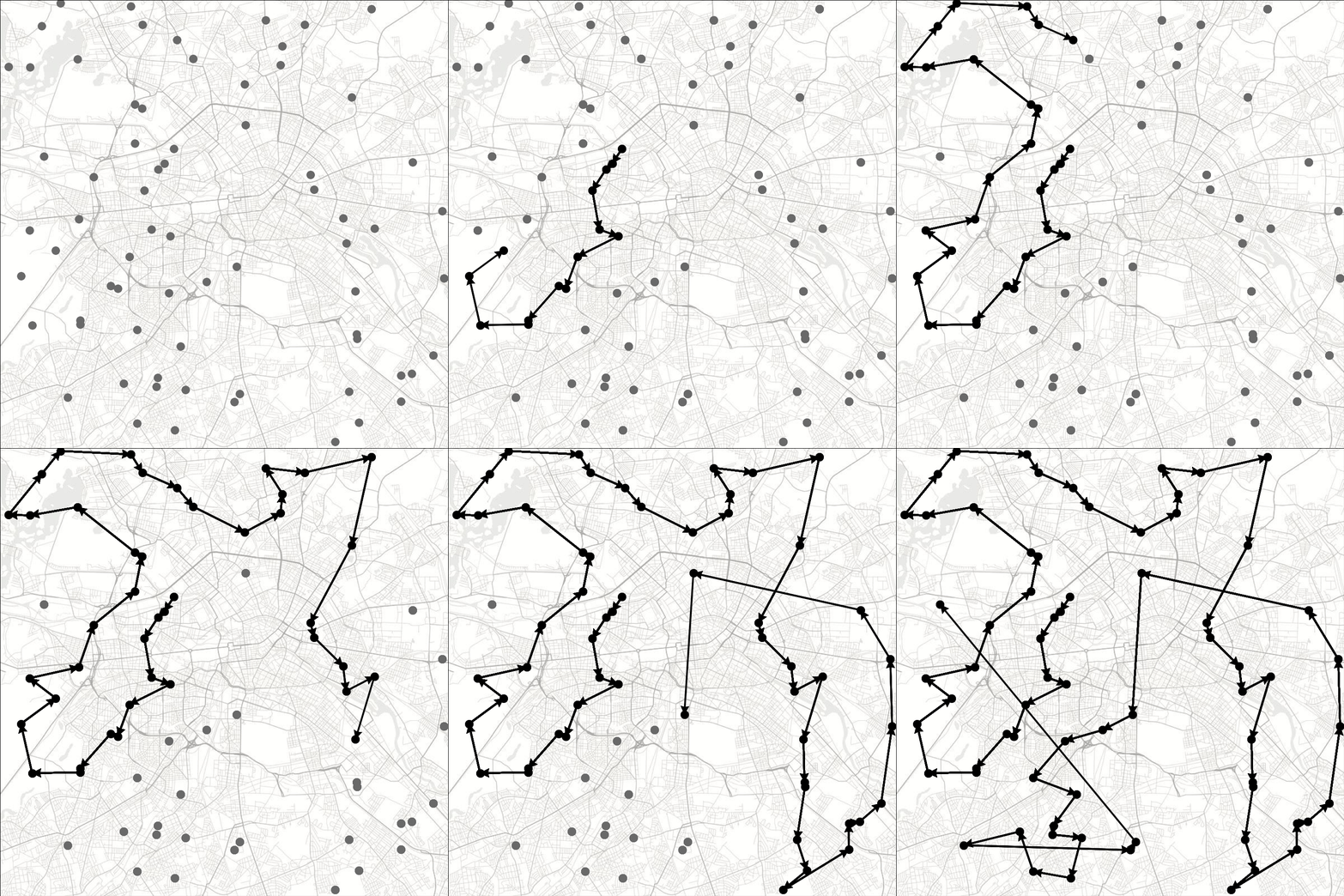
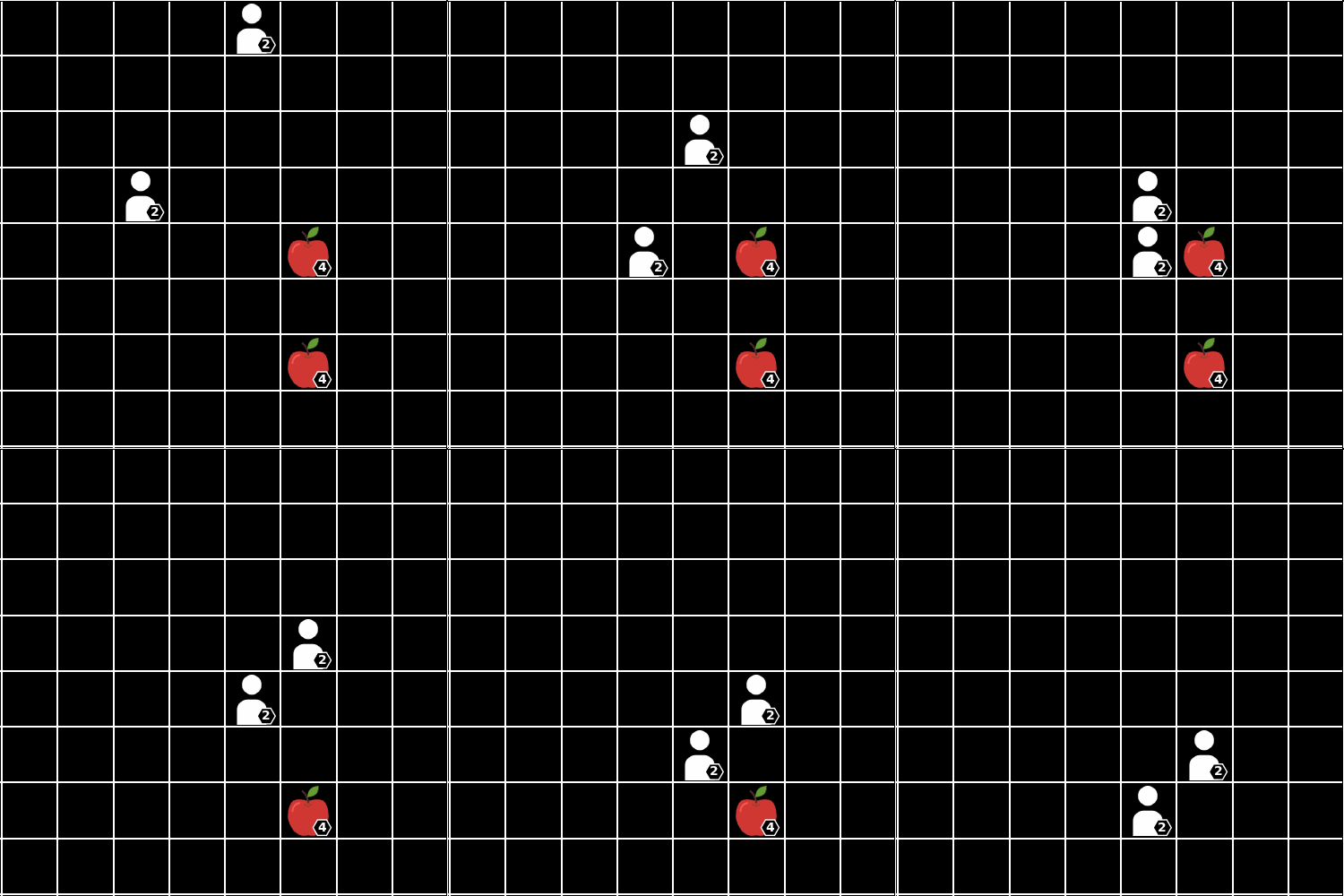
| Environment | Category | Registered Version(s) | Source | Description | |------------------------------------------|----------|------------------------------------------------------|--------------------------------------------------------------------------------------------------|------------------------------------------------------------------------| | 🔢 Game2048 | Logic | Game2048-v1 | code | doc | | 🎨 GraphColoring | Logic | GraphColoring-v1 | code | doc | | 💣 Minesweeper | Logic | Minesweeper-v0 | code | doc | | 🎲 RubiksCube | Logic | RubiksCube-v0RubiksCube-partly-scrambled-v0 | code | doc | | 🔀 SlidingTilePuzzle | Logic | SlidingTilePuzzle-v0 | code | doc | | ✏️ Sudoku | Logic | Sudoku-v0 Sudoku-very-easy-v0| code | doc | | 📦 BinPack (3D BinPacking Problem) | Packing | BinPack-v1 | code | doc | | 🧩 FlatPack (2D Grid Filling Problem) | Packing | FlatPack-v0 | code | doc | | 🏭 JobShop (Job Shop Scheduling Problem) | Packing | JobShop-v0 | code | doc | | 🎒 Knapsack | Packing | Knapsack-v1 | code | doc | | ▒ Tetris | Packing | Tetris-v0 | code | doc | | 🧹 Cleaner | Routing | Cleaner-v0 | code | doc | | :link: Connector | Routing | Connector-v3 | code | doc | | 🚚 CVRP (Capacitated Vehicle Routing Problem) | Routing | CVRP-v1 | code | doc | | 🚚 MultiCVRP (Multi-Agent Capacitated Vehicle Routing Problem) | Routing | MultiCVRP-v0 | code | doc | | :mag: Maze | Routing | Maze-v0 | code | doc | | :robot: RobotWarehouse | Routing | RobotWarehouse-v0 | code | doc | | 🐍 Snake | Routing | Snake-v1 | code | doc | | 📬 TSP (Travelling Salesman Problem) | Routing | TSP-v1 | code | doc | | Multi Minimum Spanning Tree Problem | Routing | MMST-v0 | code | doc | | ᗧ•••ᗣ•• PacMan | Routing | PacMan-v1 | code | doc | 👾 Sokoban | Routing | Sokoban-v0 | code | doc | | 🍎 Level-Based Foraging | Routing | LevelBasedForaging-v0 | code | doc | | 🚁 Search and Rescue | Swarms | SearchAndRescue-v0 | code | doc |
Installation 🎬
You can install the latest release of Jumanji from PyPI:
pip install -U jumanjiAlternatively, you can install the latest development version directly from GitHub:
pip install git+https://github.com/instadeepai/jumanji.gitJumanji has been tested on Python 3.10, 3.11 and 3.12. Note that because the installation of JAX differs depending on your hardware accelerator, we advise users to explicitly install the correct JAX version (see the official installation guide).
Rendering: Matplotlib is used for rendering all the environments. To visualize the environments you will need a GUI backend. For example, on Linux, you can install Tk via: apt-get install python3-tk, or using conda: conda install tk. Check out Matplotlib backends for a list of backends you can use.
Quickstart ⚡
RL practitioners will find Jumanji's interface familiar as it combines the widely adopted OpenAI Gym and DeepMind Environment interfaces. From OpenAI Gym, we adopted the idea of a registry and the render method, while our TimeStep structure is inspired by DeepMind Environment.
Basic Usage 🧑💻
import jax
import jumanji
Instantiate a Jumanji environment using the registry
env = jumanji.make('Snake-v1')
Reset your (jit-able) environment
key = jax.random.PRNGKey(0)
state, timestep = jax.jit(env.reset)(key)
(Optional) Render the env state
env.render(state)
Interact with the (jit-able) environment
action = env.actionspec.generatevalue()          # Action selection (dummy value here)
state, timestep = jax.jit(env.step)(state, action) # Take a step and observe the next state and time stepstaterepresents the internal state of the environment: it contains all the information required
observation
contained in the timestep, which is the information perceived by the agent.
timestepis a dataclass containingstep_type,reward,discount,observationand
extras. This structure is similar to
dm_env.TimeStep except for the
extras field that was added to allow users to log environments metrics that are neither part of
the agent's observation nor part of the environment's internal state.
Advanced Usage 🧑🔬
Being written in JAX, Jumanji's environments benefit from many of its features including automatic vectorization/parallelization (jax.vmap, jax.pmap) and JIT-compilation (jax.jit), which can be composed arbitrarily. We provide an example of a more advanced usage in the advanced usage guide.
Registry and Versioning 📖
Like OpenAI Gym, Jumanji keeps a strict versioning of its environments for reproducibility reasons. We maintain a registry of standard environments with their configuration. For each environment, a version suffix is appended, e.g. Snake-v1. When changes are made to environments that might impact learning results, the version number is incremented by one to prevent potential confusion. For a full list of registered versions of each environment, check out the documentation.
Training 🏎️
To showcase how to train RL agents on Jumanji environments, we provide a random agent and a vanilla actor-critic (A2C) agent. These agents can be found in jumanji/training/.
Because the environment framework in Jumanji is so flexible, it allows pretty much any problem to be implemented as a Jumanji environment, giving rise to very diverse observations. For this reason, environment-specific networks are required to capture the symmetries of each environment. Alongside the A2C agent implementation, we provide examples of such environment-specific actor-critic networks in jumanji/training/networks.
⚠️ The example agents in jumanji/training are only meant to serve as inspiration for how one
can implement an agent. Jumanji is first and foremost a library of environments - as such, the
agents and networks will not be maintained to a production standard.
For more information on how to use the example agents, see the training guide.
Contributing 🤝
Contributions are welcome! See our issue tracker for good first issues. Please read our contributing guidelines for details on how to submit pull requests, our Contributor License Agreement, and community guidelines.
Citing Jumanji ✏️
If you use Jumanji in your work, please cite the library using:
@misc{bonnet2024jumanji,
    title={Jumanji: a Diverse Suite of Scalable Reinforcement Learning Environments in JAX},
    author={Clément Bonnet and Daniel Luo and Donal Byrne and Shikha Surana and Sasha Abramowitz and Paul Duckworth and Vincent Coyette and Laurence I. Midgley and Elshadai Tegegn and Tristan Kalloniatis and Omayma Mahjoub and Matthew Macfarlane and Andries P. Smit and Nathan Grinsztajn and Raphael Boige and Cemlyn N. Waters and Mohamed A. Mimouni and Ulrich A. Mbou Sob and Ruan de Kock and Siddarth Singh and Daniel Furelos-Blanco and Victor Le and Arnu Pretorius and Alexandre Laterre},
    year={2024},
    eprint={2306.09884},
    url={https://arxiv.org/abs/2306.09884},
    archivePrefix={arXiv},
    primaryClass={cs.LG}
}
See Also 🔎
Other works have embraced the approach of writing RL environments in JAX. In particular, we suggest users check out the following sister repositories:
- 🤖 Qdax is a library to accelerate
- 🌳 Evojax provides tools to enable neuroevolution algorithms
- 🦾 Brax is a differentiable physics engine that simulates
- 🏋️ Gymnax implements classic environments including
- 🎲 Pgx provides classic board game environments like
Acknowledgements 🙏
The development of this library was supported with Cloud TPUs from Google's TPU Research Cloud (TRC) 🌤.


