
Highly optimized scanner for new liquidity pools on the Solana blockchain
Last updated May 30, 2026
10
Stars
2
Forks
0
Issues
0
Stars/day
Attention Score
1
Language breakdown
Rust 100.0%
▸ Files
click to expand
README
DEX Pulse - Solana Liquidity Pool Scanner
DEX Pulse is a highly optimized scanner for new liquidity pools on the Solana blockchain.
Built with Rust, this tool leverages the language’s performance to ensure efficient detection of liquidity pool creation transactions, often before the transaction achieves a finalized commitment. The project is designed to be lightweight and efficient, with minimal external dependencies, providing real-time liquidity pool data for Solana-based decentralized exchanges (DEX).
Demo
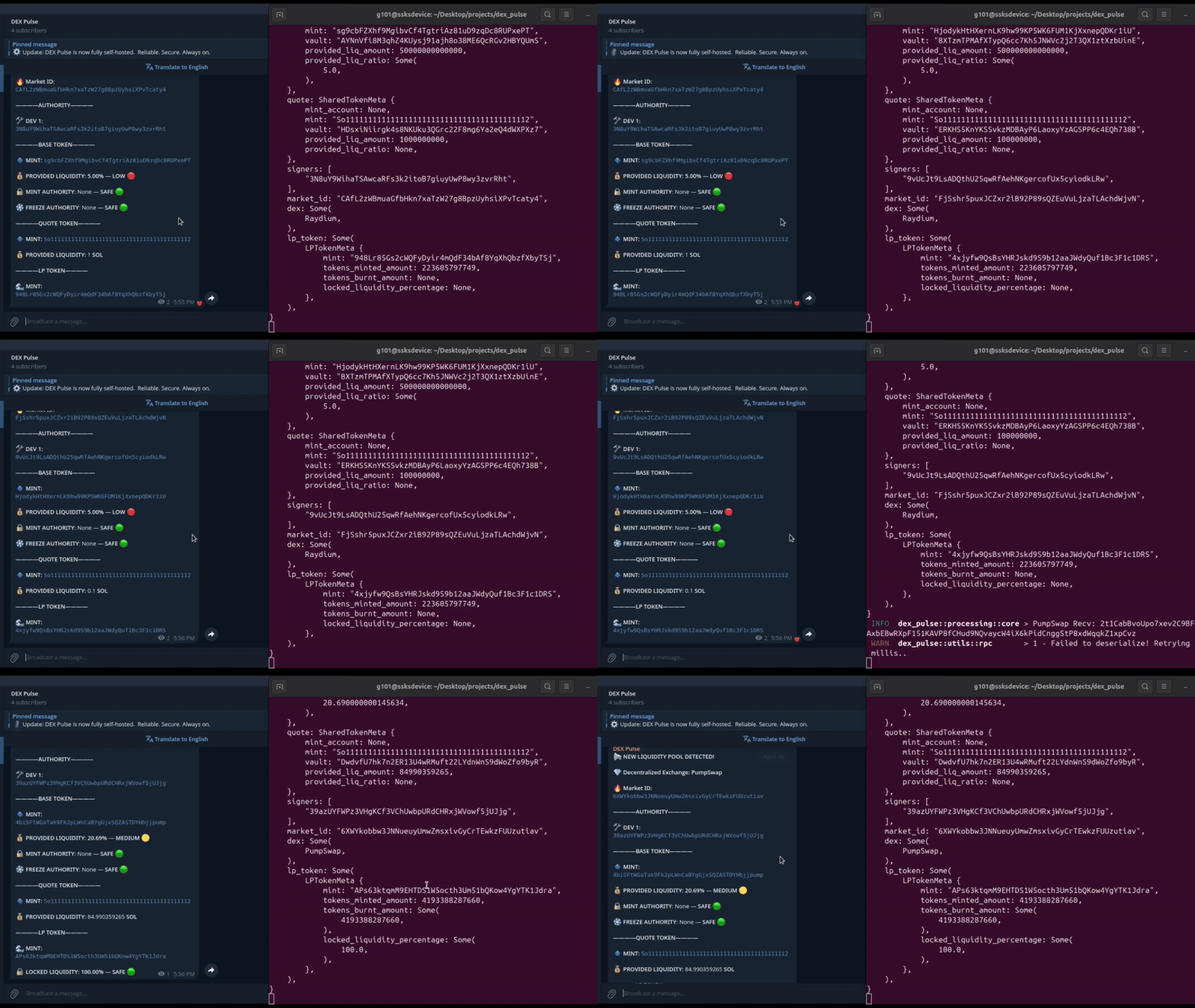
Features
- Real-Time Liquidity Pool Detection: DEX Pulse scans for newly created liquidity pools on the Solana blockchain and provides critical metadata in real-time.
- Optimized Performance: The bot is optimized using Rust’s performance capabilities, enabling early detection of transactions before they are finalized.
- Custom Parsers: The project uses custom-built parsers to analyze instructions. This minimizes code size, reduces the reliance on external crates, and enhances performance by using base58 encoding in RPC requests instead of the heavier jsonParsed format.
- Custom Lightweight RpcClient: This project uses a custom, lightweight RpcClient, which allows for minimal overhead and maximum performance. Unlike most projects, it does not rely on the Solana official crates, which ensures better control and efficiency when interacting with Solana RPC.
- No External Services or Aggregators: This project doesn't rely on aggregators or other third-party services, except for plain Solana RPC. This ensures maximum control, security, and reliability.
- Multi-DEX Support: The architecture is designed to support unlimited DEX platforms. Currently, Raydium, Meteora and PumpSwap are implemented, with plans to extend support to other platforms in the future.
- Telegram Integration: The bot can post real-time liquidity pool data to a Telegram channel, providing insights on new pools immediately after they are created. Additionally, you can configure the bot to send updates to your own Telegram channel. To do this, simply set the
TELOXIDETOKENvariable to the token, which can be obtained from@BotFatheron Telegram andCHANNELUSERNAMEvariable to@yourchannel(replace with your actual Telegram channel username) in the.envfile. This requires setting up the project locally or getting in touch with me to configure it for you.
Metadata Provided
For every new liquidity pool detected, the bot extracts and displays the following useful information:
- Market ID: The address of the newly created liquidity pool.
- Creator Wallets: The addresses of the creators (DEVs) of the liquidity pool.
- Mint Addresses: The addresses of the base and quote token mints.
- Liquidity Information:
provided / supply * 100, indicating how much of the total supply has been added to the pool.
- Provided Liquidity Amount: Displays the amount of SOL or USDC pooled in the liquidity pool.
- Token Authority Information:
- LP Token Meta: For pools that support minting LP tokens, additional fields are provided:
Architecture
- Rust-Based: The project is written in Rust to leverage its performance and memory safety features.
- Custom Instruction Parsers: Instruction parsers are custom-built and located in the utils/parser/ directory. These parsers handle the analysis of instructions without relying on external libraries, which reduces overhead and increases speed.
- Custom Lightweight RpcClient: The project uses a custom, lightweight RpcClient and located in the rpc/ directory, which avoids the need for Solana crates and provides minimal overhead for maximum performance when interacting with Solana RPC.
- Support for Multiple DEXs: While the current implementation supports Raydium, Meteora and PumpSwap, the architecture allows for easy extension to additional Solana-based DEX platforms in the future.
- Modular Architecture: The project is divided into several modular components, each designed to handle specific tasks. This structure allows for clean separation of concerns and scalability.
Setup & Installation
- Clone the repository:
git clone https://github.com/ibg101/dex_pulse.git
cd dex_pulse- Install dependencies:
cargo build --release- Configure the
.envfile:
RUST_LOG- Specifies the logging level. The available options are:.
trace - Logs the most detailed information, including everything down to fine-grained operations and internal states (useful for deep debugging).
- debug - Logs detailed information for debugging purposes (useful for development and troubleshooting).
- info - Logs general information about the operation of the bot (default logging level, good for regular monitoring).
- warn - Logs warnings about potential issues that might not cause errors but should be noted.
- error - Logs errors and critical issues that may halt the bot's operation (useful for catching issues that stop the bot from working).
- off - Disables logging (not recommended for production as it will hide all log messages).
TELOXIDE_TOKEN- The Telegram bot token, which can be obtained from@BotFatheron Telegram.WSURLMAINNET- The WebSocket endpoint URL for Solana's mainnet. This can be obtained from your Solana RPC provider. DO NOT USE public endpoints!HTTPURLMAINNET- The HTTP endpoint URL for Solana's mainnet. This can also be obtained from your Solana RPC provider.CHANNELUSERNAME- The username of the Telegram channel where the bot will post. Example:@dexpulse_scanner.
- Running the Bot:
cargo run --releaseLicense
This project is licensed under the MIT License. See the LICENSE file for details.


