
Ultra-lightweight (600KB) Face Anti-Spoofing classifier. Optimized MiniFASNetV2-SE implementation validated on 70k+ samples with ~98% accuracy for edge devices.
Lightweight Face Antispoof (MiniFAS, ONNX)



A lightweight face anti-spoofing model that distinguishes real faces from spoofing attempts (printed photos, screen displays, etc.).
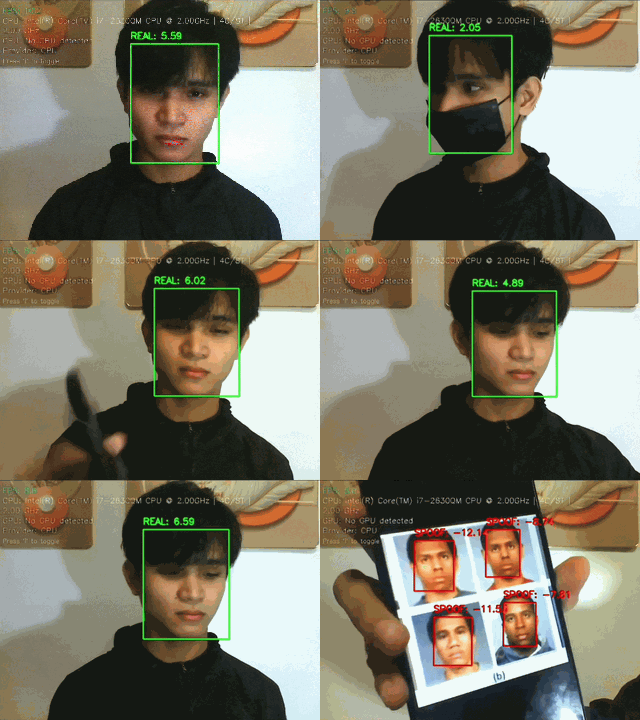
Performance Demo
Note: The demo above was recorded on legacy hardware to showcase the model's efficiency on low-spec devices.
| Metric | Details | | :--- | :--- | | CPU | Intel® Core™ i7-2630QM @ 2.00GHz (4C/8T) | | GPU | None (Inference run on CPU) |
Model
The trained model is a tiny classifier that predicts two classes: Real or Spoof.
| ONNX | Quantized ONNX | PyTorch | Input | Arch | |:---------:|:---------------:|:------------:|:-----:|:------------:| | 1.82 MB | 600 KB | 1.95 MB | 128×128 RGB | MiniFAS |
Model Performance
| Metric | Model | Quantized | |:-------|:-----:|:---------:| | Model Size | 1.82 MB | 600 KB | | Overall Accuracy | 98.20% | 98.20% | | Real Accuracy | 97.58% | 97.55% | | Spoof Accuracy | 98.73% | 98.73% | | ROC-AUC | 0.9984 | 0.9984 | | Average Precision | 0.9987 | 0.9987 |
Tested on CelebA Spoof (70k+ samples). Quantization has no accuracy drop.
Detailed metrics → | Previous results →
Pre-trained
Pre-trained models are available in the models/ directory:
| Model | Size | Format | Use Case | |:------|:----:|:------:|:---------| | best_model.pth | 1.95 MB | PyTorch | Training, fine-tuning, PyTorch inference | | best_model.onnx | 1.82 MB | ONNX | General deployment, cross-platform inference | | bestmodelquantized.onnx | 600 KB | ONNX (INT8) | Production deployment |
Why MiniFAS?
The first version used MobileNetV4 (still in src/mobilenetv4 for reference). It worked, but the model was larger than necessary and the training was more complex.
MiniFAS turned out to be a better fit:
- Smaller model, faster inference
- Built specifically for anti-spoofing, not a general-purpose backbone
- Uses Fourier Transform auxiliary loss during training—this helps the model learn frequency-domain patterns that distinguish real skin texture from printed photos and screen displays
- SE (Squeeze-and-Excitation) blocks for adaptive channel attention
The MobileNetV4 code remains in src/mobilenetv4/ for future experiments and reference. All current training uses MiniFASNet V2 SE.
Quick Start
1. Create and activate a virtual environment (Recommended)
Using Conda:
conda create -n face-antispoof python conda activate face-antispoofOR using venv:
python -m venv venv Linux/macOS
source venv/bin/activate Windows
venv\Scripts\activate2. Install dependencies
pip install -r requirements.txt[!IMPORTANT]
Python Version: This project requires Python 3.8.0 or higher.
Compatibility Note: Python 3.7.x
Tested on Python 3.7.16 and was confirmed that they are not compatible. Attempting to install dependencies on Python 3.7.x will result in asubprocess-exited-with-error during the pip installation of backend dependencies.
Error Example:
ERROR: Ignored the following versions that require a different python version: 0.1.0 Requires-Python >=3.9; ... ERROR: Could not find a version that satisfies the requirement puccinialin ERROR: No matching distribution found for puccinialinNote: To run on GPU, installonnxruntime-gpuinstead ofonnxruntime.
Run the Demo
Webcam:
python demo.pypython demo.py --camera <index>Single image:
python demo.py --image <path>Green bbox = real. Red bbox = spoof.
Training
1. Prepare the Dataset
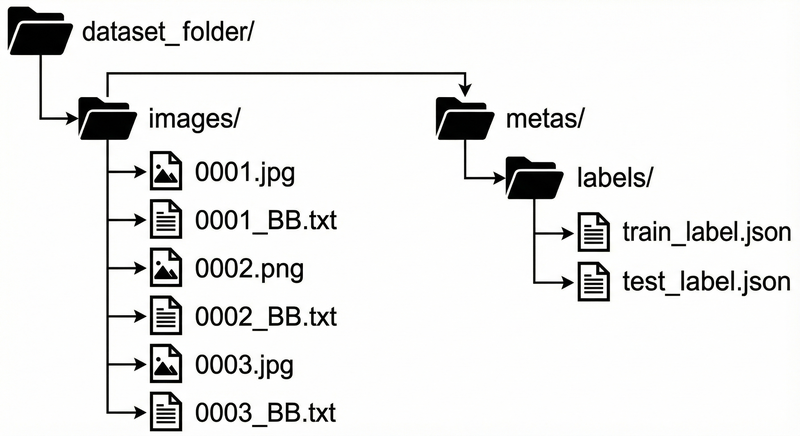
The dataset needs:
- Face images (
.jpgor.png) - Bounding box files: for
image.jpg, a correspondingimage_BB.txtwithx y w h - Label files:
metas/labels/trainlabel.jsonandmetas/labels/testlabel.json
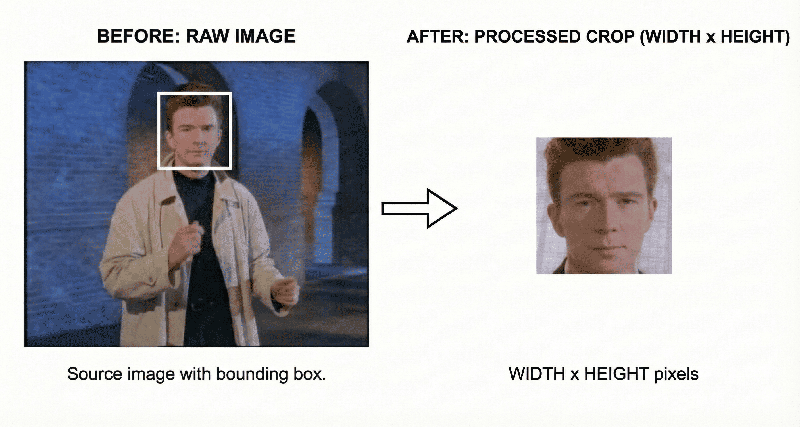
Run the prep script to crop faces:
python scripts/prepare_data.py \
  --orig_dir <path> \
  --crop_dir <path> \
  --size <number> \
  --bboxexpansionfactor <float> \
  --spoof_types <number> [<number> ...]
This reads images, crops faces using the bounding boxes (with some padding), resizes to the specified size, and organizes everything into train/ and test/ folders.
→ Why these preprocessing choices? (interpolation methods, padding strategy, etc.)
2. Train
python scripts/train.py \
  --crop_dir <path> \
  --input_size <number> \
  --batch_size <number> \
  --output_dir <path>
Checkpoints and TensorBoard logs go to <output_dir>/MINIFAS/.
Resume training:
python scripts/train.py \ --crop_dir <path> \ --resume <checkpoint_path>3. Prepare Model
Extract clean model weights from checkpoint (removes optimizer state, FTGenerator, DataParallel prefixes):
python scripts/preparebestmodel.py <epoch_checkpoint> \
  --output <path> \
  --input_size <number>
This creates a clean, inference-ready PyTorch model.
4. Export to ONNX
Regular ONNX export:
python scripts/exportonnx.py <checkpointpath> \ --input_size <number> \ --output <path>Quantized ONNX:
python scripts/quantizeonnx.py <checkpointpath> \ --input_size <number> \ --output <path>Repo Structure
├── demo.py              # Inference demo
├── src/
│   ├── detection/       # Face detection
│   ├── inference/       # Model inference
│   ├── minifasv2/       # Training code
│   └── mobilenetv4/     # Legacy
├── scripts/             # Data prep, training, export
├── models/              # Pre-trained models
├── docs/                # Documentation
└── assets/              # Demo assets & results
Limitations
Works best with well-lit, frontal faces. See Limitations & Notes for edge cases and tips.
Acknowledgment
This project is based on the MiniFAS architecture from the Silent Face Anti-Spoofing project by Minivision AI, licensed under Apache-2.0.
This repository provides an independent training pipeline, ONNX export,quantization, and deployment tooling.
License
Apache-2.0. See LICENSE.


