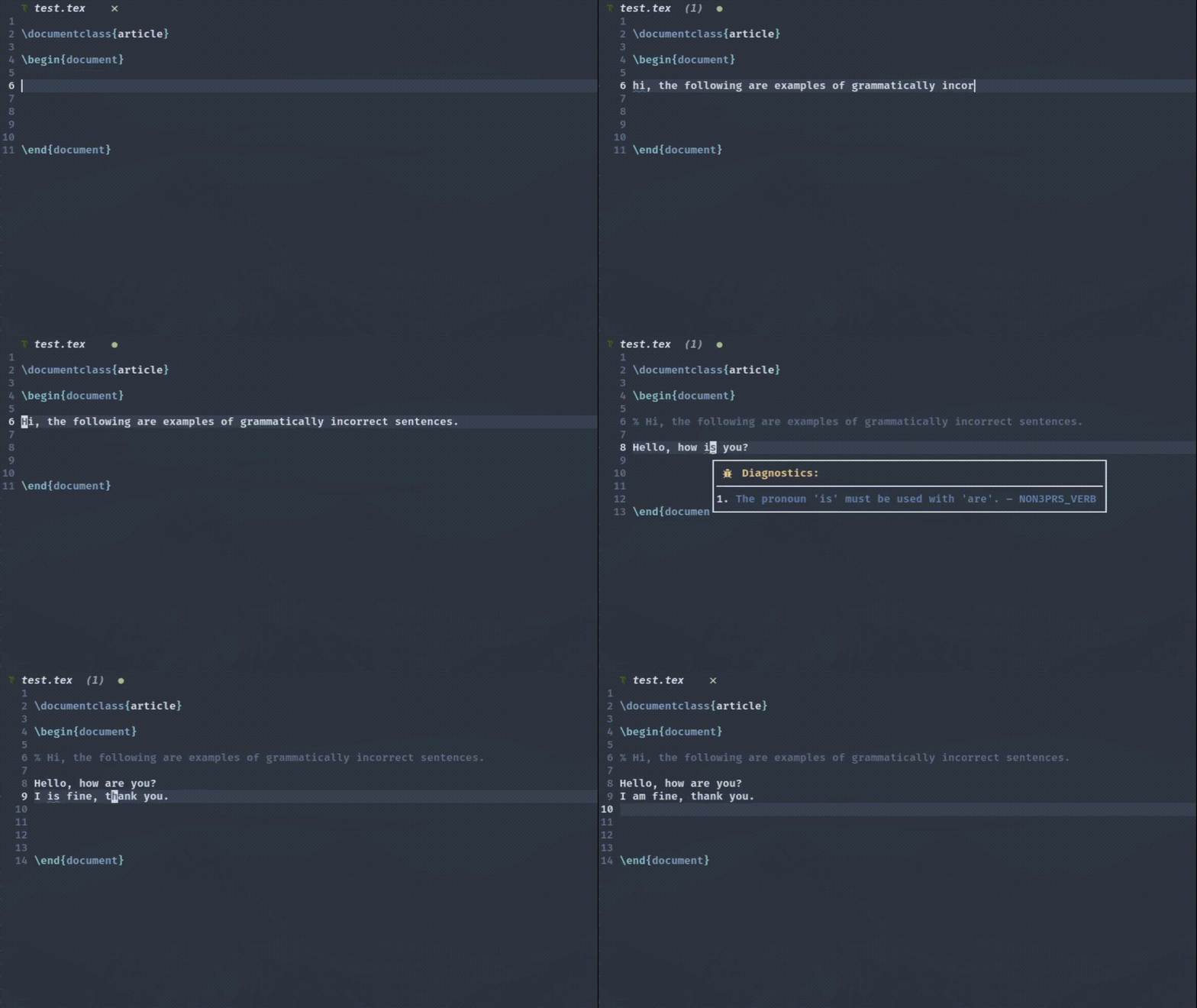
Grammar Guard is a Neovim plugin that checks your grammar as you write your LaTeX, Markdown or plain text document.
__ / / / / _/ / / ( / /ltex/ ' \/ ' \// / / ( / // /// / \// \,///////\,// \/\,/\,// \,_/</code></pre>🚧 Status
This plugin is archived. It was created when there wasn't an easy way to install the
language server, prefer using mason.nvim instead.:GrammarInstallℹ️ Introduction
Grammar Guard is a Neovim plugin that uses ltex-ls to check your grammar.
It uses the built-in Neovim LSP to provide feedback while you're writing your L<big><sup>A</sup></big>T<big><sub>E</sub></big>X or Markdown Documents.
🌟 Features
- Easy installer, just run
from Neovim (requires nvim-lsp-installer).grammar-guard.nvimL<big><sup>A</sup></big>T<big><sub>E</sub></big>X, Markdown or plain text grammar checking. Integrates well with nvim-lspconfig. Work properly on Windows, Linux, MacOS. ⚡️ Requirements
- Neovim >= 0.5.0
📦 Installation
Install via your favorite package manager:
To install
you need to install it with your preferred neovim package manager.:GrammarInstallpacker.nvim
<pre><code class="lang-lua">use { "brymer-meneses/grammar-guard.nvim", requires = { "neovim/nvim-lspconfig", "williamboman/nvim-lsp-installer" } }</code></pre>
Run
or with nvim-lsp-installer:LspInstall ltex:LspInstallInfo` for more information about installed servers.Run
⚙️ Setup
Integrate the following to your neovim configuration:
After that, you should tune the LSP configuration to your liking.-- hook to nvim-lspconfig require("grammar-guard").init()Example Configuration:
-- setup LSP config require("lspconfig").grammar_guard.setup({ cmd = { '/path/to/ltex-ls' }, -- add this if you install ltex-ls yourself settings = { ltex = { enabled = { "latex", "tex", "bib", "markdown" }, language = "en", diagnosticSeverity = "information", setenceCacheSize = 2000, additionalRules = { enablePickyRules = true, motherTongue = "en", }, trace = { server = "verbose" }, dictionary = {}, disabledRules = {}, hiddenFalsePositives = {}, }, }, })Disclaimer:
This plugin is largely based on the following pull request.