
Ajenti Core and stock plugins

Ajenti is a Linux & BSD modular server admin panel. Ajenti 2 provides a new interface and a better architecture, developed with Python3 and AngularJS.



Feature highlights
- Easy installation : Ajenti 2 can be easy installed with pip and the provided script.
- Existing configuration : Picks up your current configuration and works on your existing system as-is, without any preparation.
- Caring : Does not overwrite your config files, options and comments. All changes are non-destructive.
- Batteries included : Includes lots of plugins for system and software configuration, monitoring and management.
- Extensible : Ajenti 2 is easily extensible using Python. Plugin development is a quick and pleasant with Ajenti APIs. Write your first plugin.
- Modern : Pleasant to look at, satisfying to click and accessible anywhere from tablets and mobile.
- Lightweight : Small memory footprint and CPU usage. Runs on low-end machines, wall plugs, routers and so on.
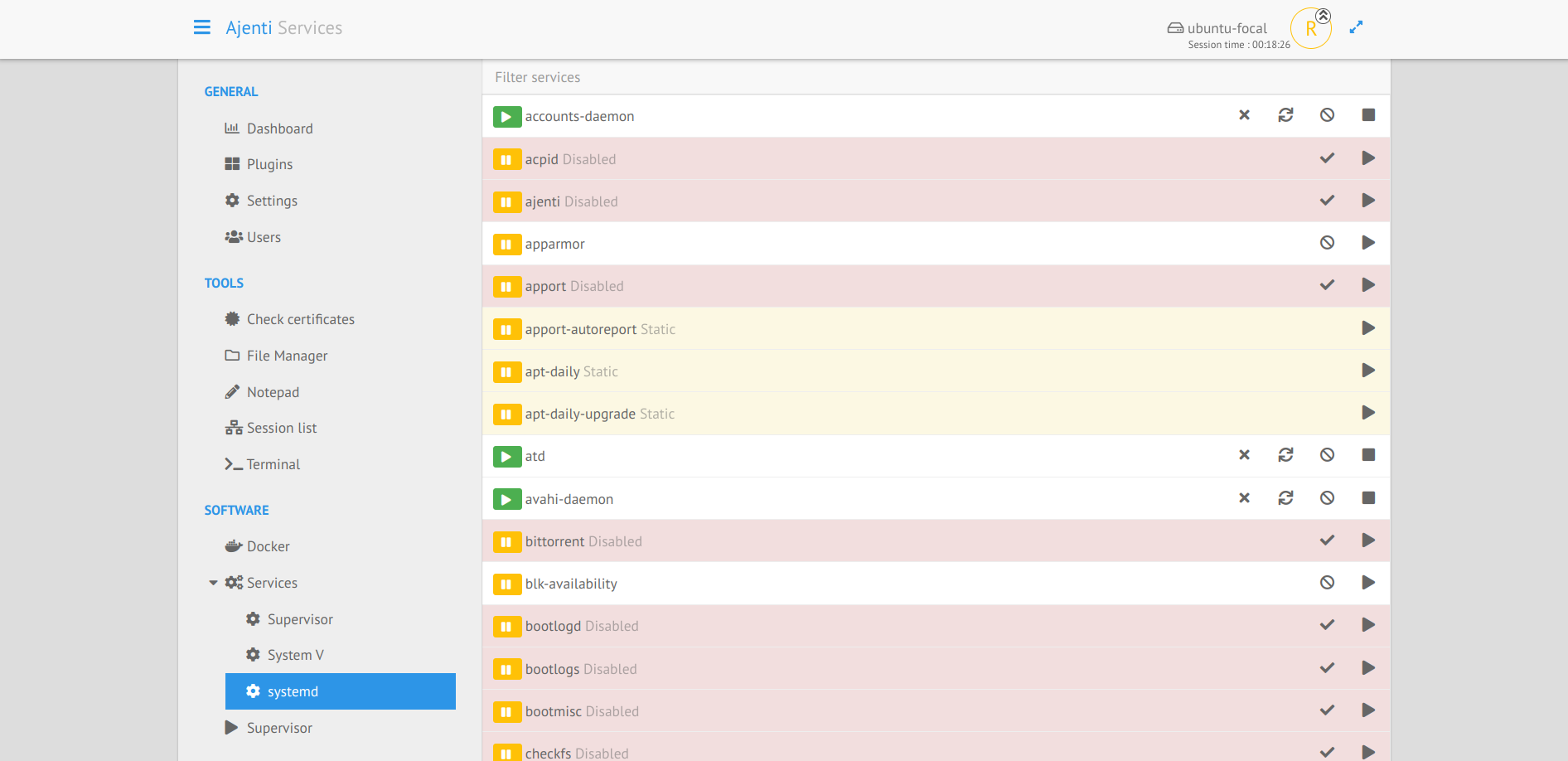
Screenshots
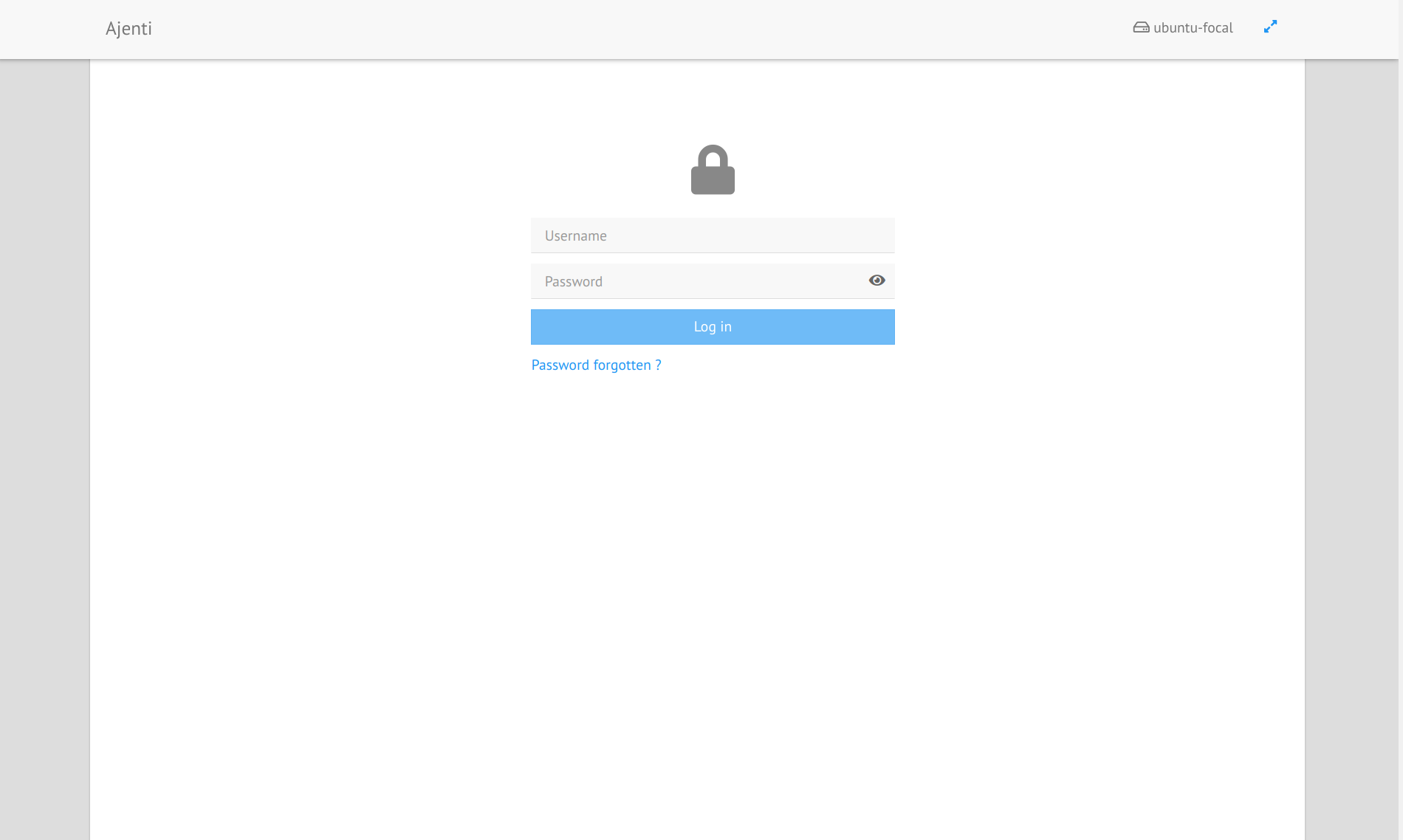
|
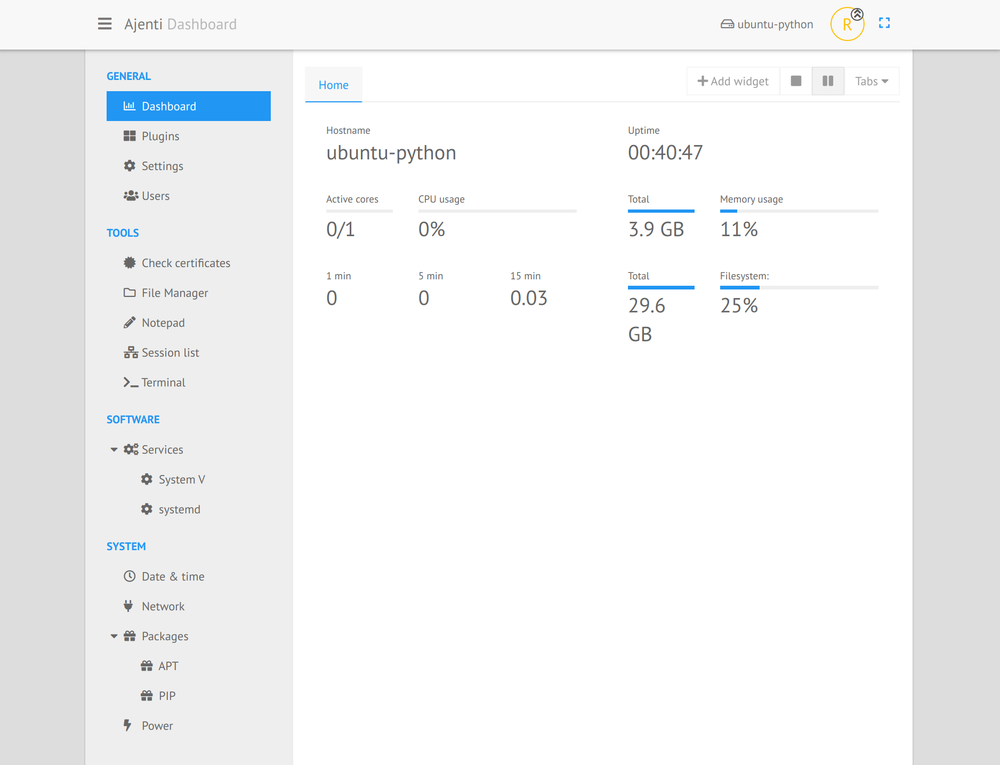
|
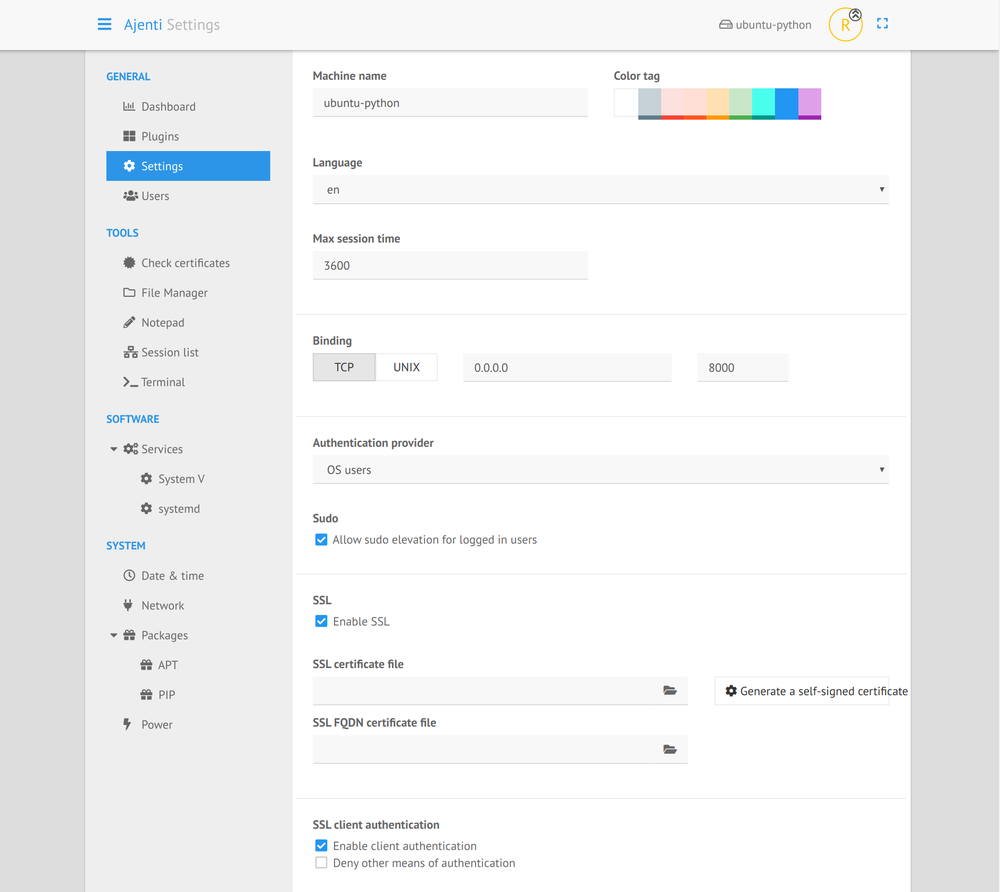
|
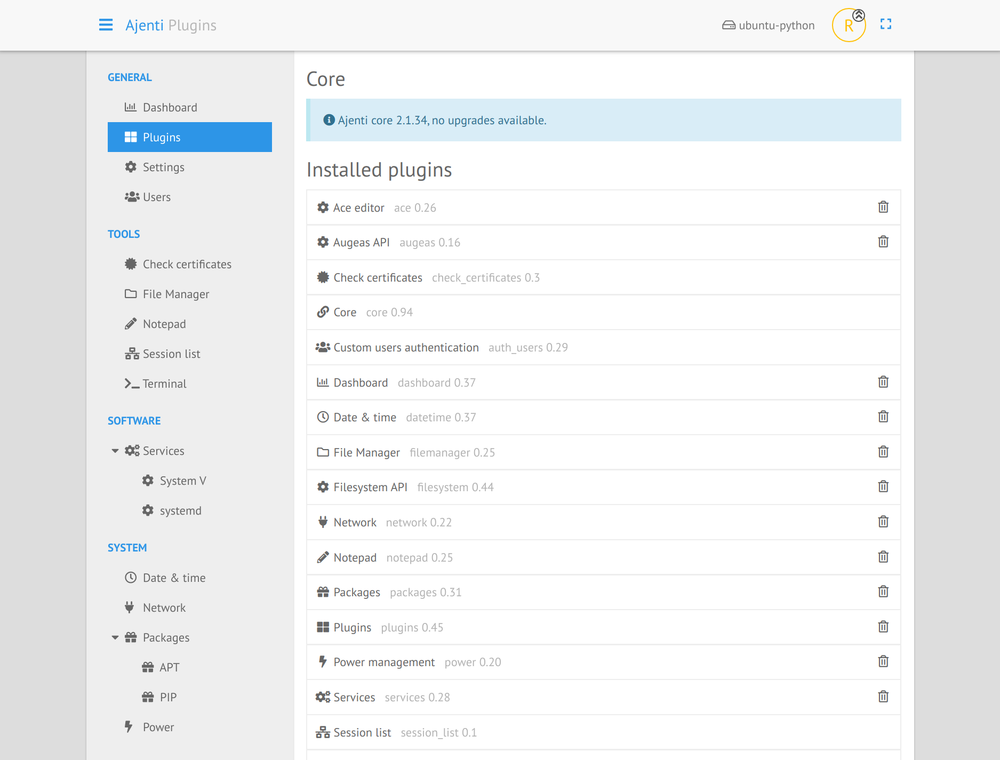
|
|

|
See https://docs.ajenti.org for more information
Contributors ✨
Thanks goes to these wonderful people (emoji key):


This project follows the all-contributors specification. Contributions of any kind welcome!
Contributing
Helpers are welcome ! There are many ways to help in Ajenti Project :
* Translations * Plugin development * Core development
Roadmap
Actually big changes are planned and under development. A global roadmap is :
* Migrating to Python3 * Migrating to python-socketio * Implement better API REST with @get, @post ... decorators * Migrating from AngularJS to Angular 13 (work in progress): * plugins core and dashboard are almost done, but there's a lot of work to migrate all other plugins. * This work take actually place in the branch ajenti-3-dev and the new plugins are stored in the directory plugins-new * The documentation is located at https://docs.ajenti.org/en/ajenti-3-dev/index.html * Add a lot of new plugins: once the migration to Angular done, we can add a lot of plugins to manage services on the server ( like apache2, nginx, postfix, etc ... ). * Migrating to asyncio: concept tested, but migration not really started.


