
Academic certificate issuing and verification application using Hyperledger Fabric and Nodejs
Academic Certificates on the Blockchain
The academic certificate verification platform using blockchain technology is used to issue, manage and verify academic certificates in a secure and distributed manner. This project addresses the need for a secure digital platform to issue and verify academic certificates without intervention from the original certificate issuer (University).
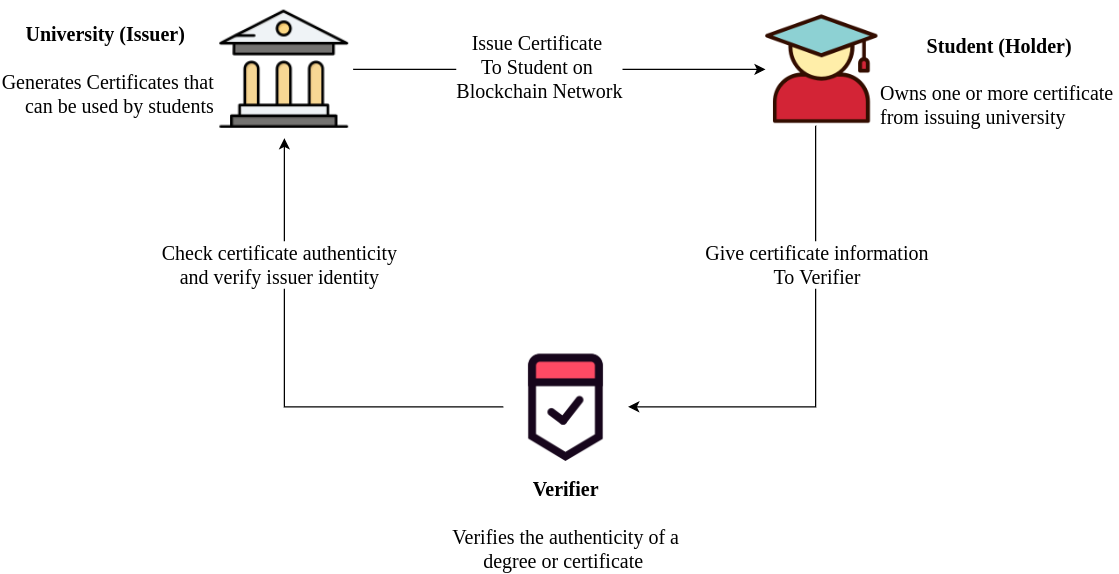
The core functionality of this application are :
- Create and issue academic certificates.
- Manage and share academic certificates.
- Verify authenticity of shared certificates.
Architecture Overview
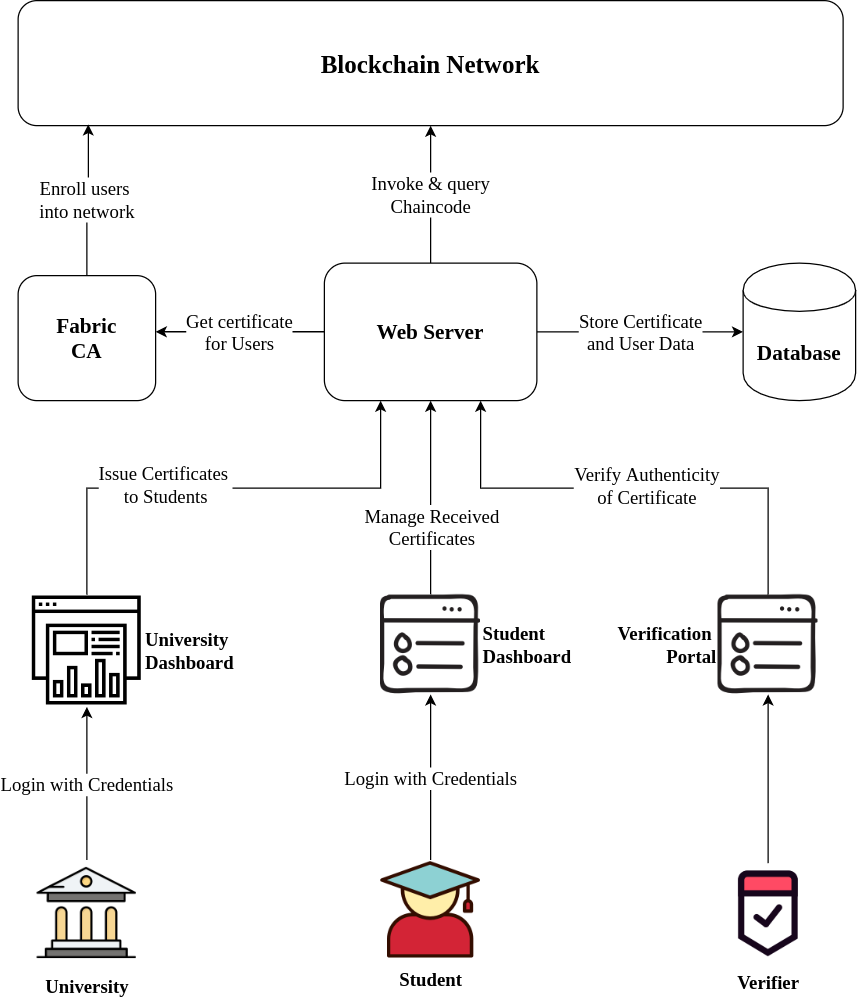
The following technologies are used on the application
- Hyperledger Fabric: Used to build the blockchain network, run smart contracts. Fabric CA is used to enroll members in the network.
- Node.js: Backend of the web application is built in nodeJS runtime using the express framework. Chaincode is also written in NodeJS.
- MongoDB: The user and certificate data is stored in MongoDB database.
- Bootstrap: The front-end of the web application is built using bootstrap, ejs & jQuery.
Network Users
The users of the platform include - Universities, Students and Certificate Verifiers (Eg - Employers). The actions that can be performed by each party are as follows
Universities
- Issue academic certificates.
- View academic certificates issued.
- Endorse Verification and digitally sign academic certificates.
- Receive academic certificates from universities.
- View and manage received academic certificates.
- Share academic certificates with third party verifiers.
- Selective disclosure of certificate data.
- Receive certificate data from students.
- Verify certificate authenticity with blockchain platform.
Getting Started
IMPORTANT NOTE: The instructions for building this project are out of date. I'm unfortunately not in a position right now to test and update these instructions. If you're able to get the project up and running properly. a pull request to update the following instructions is appreciated!
Related Issue: #4
Prerequisites
In order to install the application, please make sure you have the following installed with the same major version number.
1) Hyperledger fabric version 2.1.x.
2) Node version 12.x.
3) MongoDB version 4.0.x
4) Latest version of NPM package manager
Starting Fabric Network
1) Clone the repo
git clone https://github.com/TasinIshmam/blockchain-academic-certificates.git# at fabric-samples cd test-network ./network.sh up createChannel -ca -c mychannel -s couchdbStarting Web Application
Make sure mongodb and fabric network are running in the background before starting this process.1) Go to web-app
# at blockchain-academic-certificates cd web-appnpm install npm install --only=dev # For dev dependenciestouch .env~/fabric-samples/test-network/organizations/peerOrganizations/org1.example.com/connection-org1.jsonMONGODBURILOCAL = mongodb://localhost:27017/blockchaincertificate PORT = 3000 LOG_LEVEL = info EXPRESSSESSIONSECRET = sdfsdfddfgdfg3242efDFHI234 CCP_PATH = /home/tasin/fabric-samples/test-network/organizations/peerOrganizations/org1.example.com/connection-org1.json FABRICCHANNELNAME = mychannel FABRICCHAINCODENAME = fabcar_1npm run start-developmentProject Link: https://github.com/TasinIshmam/blockchain-academic-certificates


