
Vue drag-and-drop component based on Sortable.js

Vue.Draggable







Vue component (Vue.js 2.0) or directive (Vue.js 1.0) allowing drag-and-drop and synchronization with view model array.
Based on and offering all features of Sortable.js
For Vue 3
See vue.draggable.nextDemo
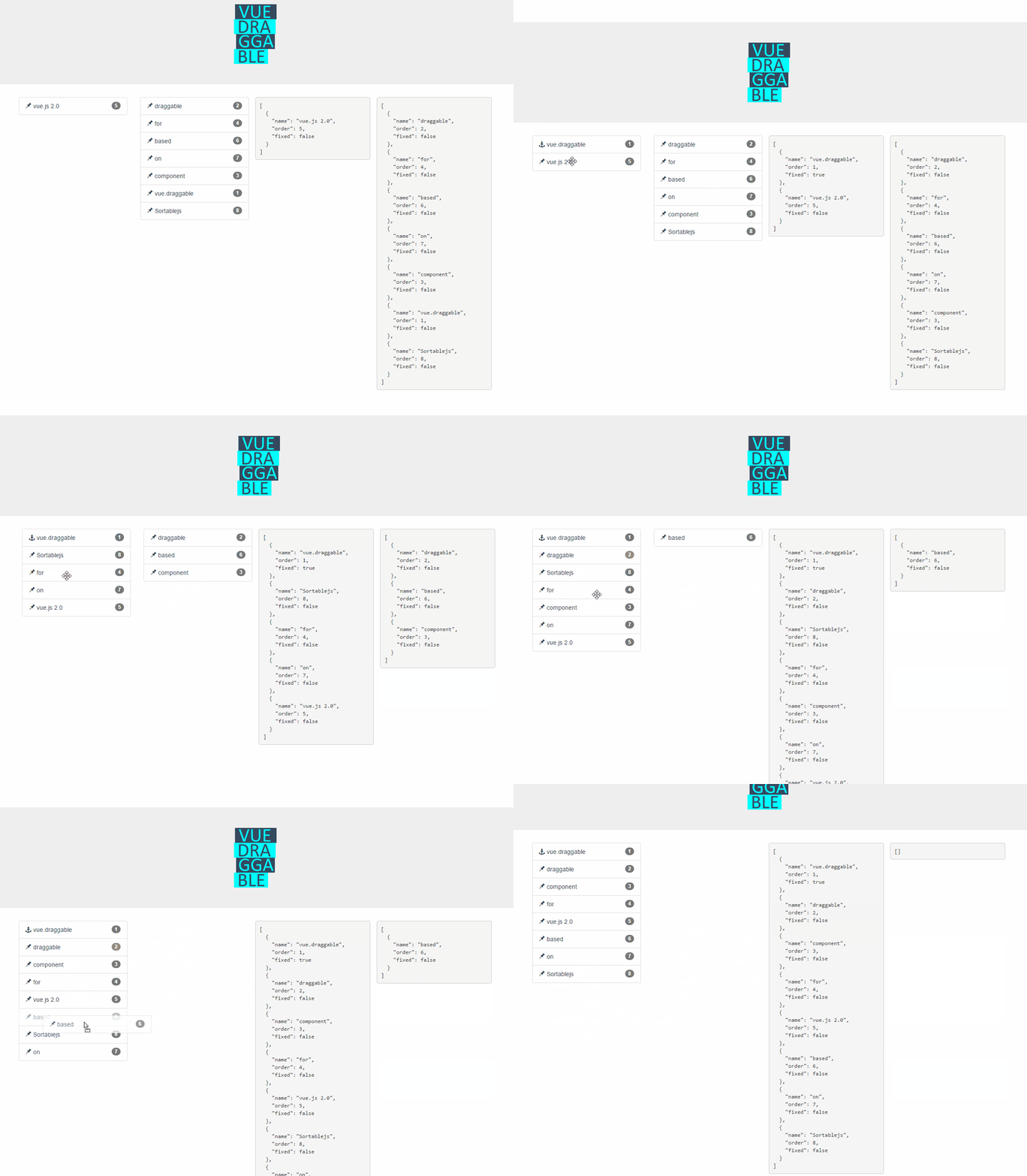
Live Demos
https://sortablejs.github.io/Vue.Draggable/
https://david-desmaisons.github.io/draggable-example/
Features
- Full support of Sortable.js features:
- Keeps in sync HTML and view model list
- Compatible with Vue.js 2.0 transition-group
- Cancellation support
- Events reporting any changes when full control is needed
- Reuse existing UI library components (such as vuetify, element, or vue material etc...) and make them draggable using
tagandcomponentDataprops
Backers
Looking for backers!
Donate
Find this project useful? You can buy me a :coffee: or a :beer:

Installation
With npm or yarn
yarn add vuedraggable
npm i -S vuedraggable
Beware it is vuedraggable for Vue 2.0 and not vue-draggable which is for version 1.0
with direct link
<!-- CDNJS :: Sortable (https://cdnjs.com/) -->
<!-- CDNJS :: Vue.Draggable (https://cdnjs.com/) -->
For Vue.js 2.0
Use draggable component:
Typical use:
html
<draggable v-model="myArray" group="people" @start="drag=true" @end="drag=false">
   <div v-for="element in myArray" :key="element.id">{{element.name}}</div>
</draggable>js
import draggable from 'vuedraggable'
...
export default {
components: {
draggable,
},
...With transition-group:
html
<draggable v-model="myArray">
    <transition-group>
        <div v-for="element in myArray" :key="element.id">
            {{element.name}}
        </div>
    </transition-group>
</draggable>
Draggable component should directly wrap the draggable elements, or a transition-component containing the draggable elements.
With footer slot:
html
<draggable v-model="myArray" draggable=".item">
    <div v-for="element in myArray" :key="element.id" class="item">
        {{element.name}}
    </div>
    <button slot="footer" @click="addPeople">Add</button>
</draggable>
With header slot:
html
<draggable v-model="myArray" draggable=".item">
    <div v-for="element in myArray" :key="element.id" class="item">
        {{element.name}}
    </div>
    <button slot="header" @click="addPeople">Add</button>
</draggable>
With Vuex:
<draggable v-model='myList'>computed: {
myList: {
get() {
return this.$store.state.myList
},
set(value) {
this.$store.commit('updateList', value)
}
}
}Props
value
Type:ArrayRequired:
falseDefault:
null
Input array to draggable component. Typically same array as referenced by inner element v-for directive.
This is the preferred way to use Vue.draggable as it is compatible with Vuex.
It should not be used directly but only though the v-model directive:
<draggable v-model="myArray">list
Type:ArrayRequired:
falseDefault:
null
Alternative to the value prop, list is an array to be synchronized with drag-and-drop.
The main difference is that list prop is updated by draggable component using splice method, whereas value is immutable.
Do not use in conjunction with value prop.
All sortable options
New in version 2.19Sortable options can be set directly as vue.draggable props since version 2.19.
This means that all sortable option are valid sortable props with the notable exception of all the method starting by "on" as draggable component expose the same API via events.
kebab-case propery are supported: for example ghost-class props will be converted to ghostClass sortable option.
Example setting handle, sortable and a group option:
<draggable v-model="list" handle=".handle" :group="{ name: 'people', pull: 'clone', put: false }" ghost-class="ghost" :sort="false" @change="log" > <!-- --> </draggable>tag
Type:StringDefault:
'div'
HTML node type of the element that draggable component create as outer element for the included slot.
It is also possible to pass the name of vue component as element. In this case, draggable attribute will be passed to the create component.
See also componentData if you need to set props or event to the created component.
clone
Type:FunctionRequired:
falseDefault:
(original) => { return original;}Function called on the source component to clone element when clone option is true. The unique argument is the viewModel element to be cloned and the returned value is its cloned version.
By default vue.draggable reuses the viewModel element, so you have to use this hook if you want to clone or deep clone it.
move
Type:FunctionRequired:
falseDefault:
nullIf not null this function will be called in a similar way as Sortable onMove callback. Returning false will cancel the drag operation.
function onMoveCallback(evt, originalEvent){
   ...
    // return false; — for cancel
}draggedContext: context linked to dragged element
- index: dragged element index
- element: dragged element underlying view model element
- futureIndex: potential index of the dragged element if the drop operation is accepted
- relatedContext: context linked to current drag operation
- index: target element index
- element: target element view model element
- list: target list
- component: target VueComponent
HTML:
<draggable :list="list" :move="checkMove">checkMove: function(evt){
return (evt.draggedContext.element.name!=='apple');
}componentData
Type:ObjectRequired:
falseDefault:
nullThis props is used to pass additional information to child component declared by tag props.
Value:
props: props to be passed to the child componentattrs: attrs to be passed to the child componenton: events to be subscribe in the child component
<draggable tag="el-collapse" :list="list" :component-data="getComponentData()"> <el-collapse-item v-for="e in list" :title="e.title" :name="e.name" :key="e.name"> <div>{{e.description}}</div> </el-collapse-item> </draggable>methods: { handleChange() { console.log('changed'); }, inputChanged(value) { this.activeNames = value; }, getComponentData() { return { on: { change: this.handleChange, input: this.inputChanged }, attrs:{ wrap: true }, props: { value: this.activeNames } }; } }Events
- Support for Sortable events:
start, add, remove, update, end, choose, unchoose, sort, filter, cloneEvents are called whenever onStart, onAdd, onRemove, onUpdate, onEnd, onChoose, onUnchoose, onSort, onClone are fired by Sortable.js with the same argument.
See here for reference
Note that SortableJS OnMove callback is mapped with the move prop
HTML:
<draggable :list="list" @end="onEnd">- change event
change event is triggered when list prop is not null and the corresponding array is altered due to drag-and-drop operation.This event is called with one argument containing one of the following properties: -
added: contains information of an element added to the array
- newIndex: the index of the added element
- element: the added element
- removed: contains information of an element removed from to the array
- oldIndex: the index of the element before remove
- element: the removed element
- moved: contains information of an element moved within the array
- newIndex: the current index of the moved element
- oldIndex: the old index of the moved element
- element: the moved element
Slots
Limitation: neither header or footer slot works in conjunction with transition-group.
Header
Use theheader slot to add none-draggable element inside the vuedraggable component.
Important: it should be used in conjunction with draggable option to tag draggable element.
Note that header slot will always be added before the default slot regardless its position in the template.
Ex:
html
<draggable v-model="myArray" draggable=".item">
    <div v-for="element in myArray" :key="element.id" class="item">
        {{element.name}}
    </div>
    <button slot="header" @click="addPeople">Add</button>
</draggable>
Footer
Use thefooter slot to add none-draggable element inside the vuedraggable component.
Important: it should be used in conjunction with draggable option to tag draggable elements.
Note that footer slot will always be added after the default slot regardless its position in the template.
Ex:
html
<draggable v-model="myArray" draggable=".item">
    <div v-for="element in myArray" :key="element.id" class="item">
        {{element.name}}
    </div>
    <button slot="footer" @click="addPeople">Add</button>
</draggable>
### Example * Clone * Handle * Transition * Nested * Table ### Full demo example
For Vue.js 1.0
```


