
When the stakes are high, intelligence is only half the equation - reliability is the other ⚠️
Awesome Safety-Critical AI



👋 Welcome to Awesome Safety-Critical AI - a curated space for practitioners, researchers and engineers committed to building intelligent systems that are as reliable as they are capable.
Inspired by systems thinking and engineering rigour, this project focuses on how to move from clever prototypes to fault-tolerant, production-grade ML systems.
Whether you're working on autonomous vehicles, medical diagnosis, or airbone systems, this collection offers a blueprint for AI that can be trusted when it matters most.
AI in critical systems is not about polishing demos or chasing benchmarks. It's about anticipating chaos - and designing for it.
This isn't just another (awesome) list. It's a call to action!

Table of Contents
- What is a Critical System? - AI in Critical Systems - The Bottom Line- 🌟 Editor's Choice
- 🏃 TLDR
- 📝 Articles
- ✍️ Blogs / News
- 📚 Books
- 📜 Certifications
- 🎤 Conferences
- 👩🏫 Courses
- 📙 Guidelines
- 🤝 Initiatives
- 💡 Patents
- 📋 Reports
- 🛣️ Roadmaps
- 📐 Standards
- 🛠️ Tools
- 📺 Videos
- 📄 Whitepapers
- 👷🏼 Working Groups
- 👾 Miscellaneous
- 🏁 Meta
- About Us
- Contributions
- Contributors
- Citation
🐇 Introduction
What is a critical system?
Critical systems are systems whose failure can lead to injury 🤕, loss of life ☠️, environmental harm 🌱🚱, infrastructure damage 🏗️💥, or mission failure 🎯.
| Application | Industry Vertical | Description | Failure Impact | | --------------------------------- | --------------------- | ------------------------------------- | ------------------------------------------- | | Patient Monitoring | Healthcare | Tracks vital signs | Failure can delay life-saving interventions | | Aircraft Navigation | Aerospace / Aviation | Ensures safe flight paths | Errors can lead to accidents | | Power Grid Control | Energy | Manages electricity distribution | Failures can cause blackouts | | Command & Control | Defence | Coordinates military actions | Failure risks national security | | Industrial Automation Control | Manufacturing | Oversees production processes | Malfunction can cause damage or injury | | Core Banking System | Finance | Handles transactions and account data | Downtime can affect financial operations |
These systems are expected to operate with exceptionally high levels of safety, reliability and availability, often under unclear and unpredictable conditions.
They're the kind of systems we rarely think about... until something goes terribly wrong 🫣
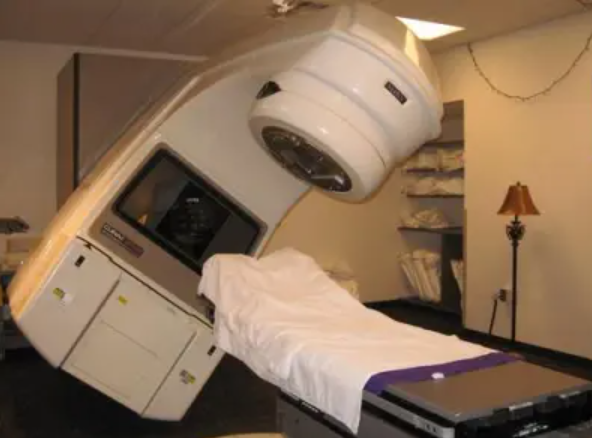
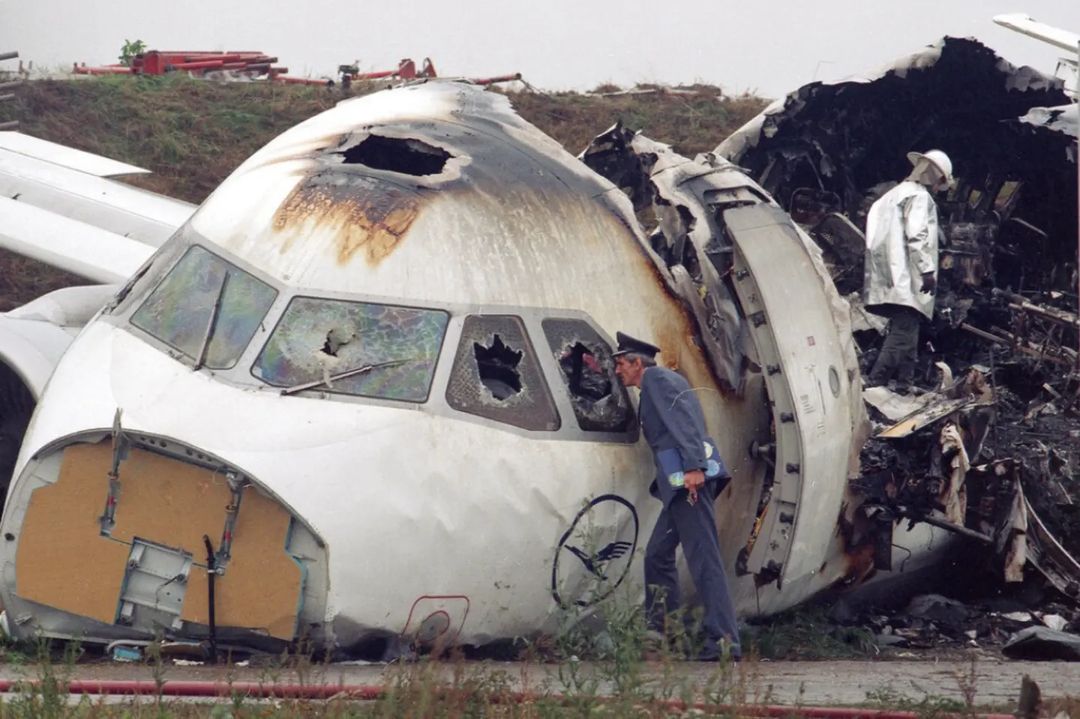


| Incident | Year | Description | Root Cause | Industry Vertical | References | |--------------------------------|-----------|----------------------------------------------------------------------------------|------------------------------------------------------------------------------------------|-------------------------------|----------------| | Therac-25 Radiation Overdose | 1985–1987 | Radiation therapy machine gave fatal overdoses to multiple patients | Race conditions and lack of safety interlocks; poor error handling | Healthcare | Wikipedia, Stanford | | Lufthansa Flight 2904 | 1993 | Airbus A320 crashed during landing in Warsaw due to thrust reverser failure | Reversers disabled by software logic when gear compression conditions weren't met | Aviation | Wikipedia, Simple Flying | | Ariane Flight V88 | 1996 | Ariane 5 rocket self-destructed seconds after launch | Unhandled overflow converting 64-bit float to 16-bit integer | Aerospace | Wikipedia, MIT | | Mars Climate Orbiter | 1999 | NASA probe lost due to trajectory miscalculation | Metric vs imperial unit mismatch between subsystems | Space Exploration | NASA | | Patriot Missile Failure | 1991 | Failed interception of Scud missile during Gulf War | Rounding error in floating-point time tracking caused significant drift | Defence | Barr Group, GAO | | Knight Capital Loss | 2012 | Trading system triggered erratic market orders causing massive financial loss | Deployment of obsolete test code; no safeguards for live operations | Finance / Trading | Henrico Dolfing, CNN | | Toyota Unintended Acceleration | 2009–10 | Reports of unexpected vehicle acceleration and crashes | Stack overflow and memory corruption in embedded ECU software | Automotive | SAE, Wikipedia | | F-22 Raptor GPS Failure | 2007 | Multiple jets lost navigation after crossing the International Date Line | Software couldn't handle date transition; triggered reboot | Aerospace / Defence | FlightGlobal, Wikipedia | | Heartbleed Bug | 2014 | Security vulnerability in SSL exposed private server data | Improper bounds checking in the heartbeat extension of OpenSSL | Cybersecurity / IT | Heartbleed, CNET | | T-Mobile Sidekick Data Loss | 2009 | Users lost personal data during server migration | Software mishandling during data center transition led to irreversible loss | Telecom / Cloud Services | TechCrunch, PCWorld |
When the stakes are this high, conventional software engineering practices must be complemented by rigorous verification, validation and certification processes that are designed to ensure system integrity.
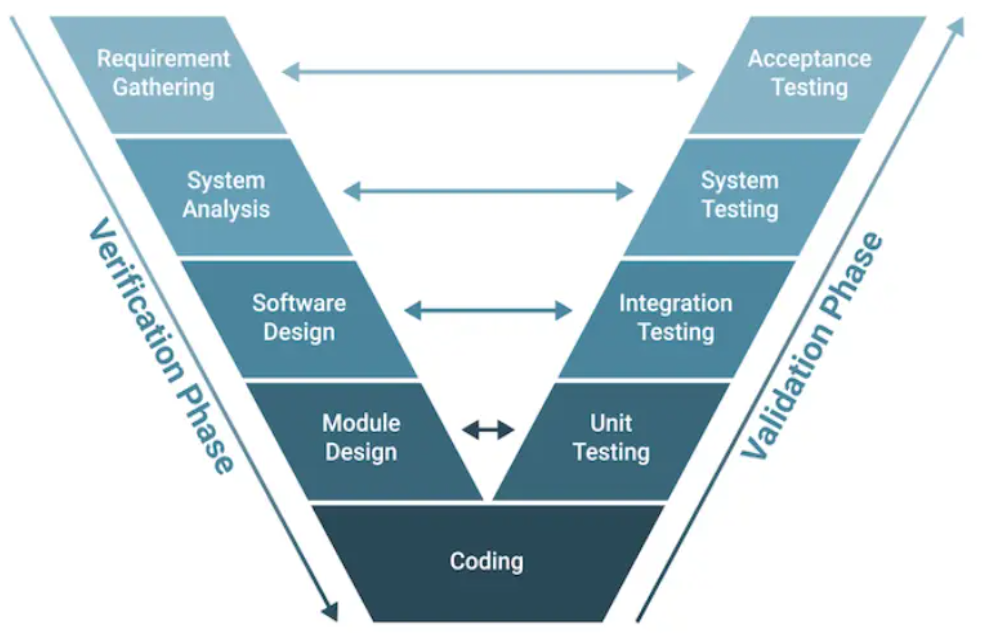
Critical systems don't forgive shortcuts. Only engineering rigour stands between order and disaster.
TL;DR Critical systems are built on trust - and trust is built on rock-solid engineering.
AI in Critical Systems
So, where does that leave us? Is there room for AI in critical systems?
This isn't just a theoretical question - we're already well beyond the realm of hypotheticals.
From making life-or-death decisions in the ICU to controlling UAVs, performing surveillance and threat detection, and powering self-driving cars, intelligent systems aren't just emerging in these these domains - they're already fully operational.
| Use Case | Brief Description | Industry Domain | References | |----------------------------------------------|----------------------------------------------------------------------------------------------------------|----------------------------------|----------------| | Predicting ICU Length of Stay | AI models use patient data to forecast ICU duration, improving resource allocation and care planning. | Healthcare | INFORMS, Springer | | AI in Radiation Therapy Planning | Optimizes dose targeting using historical patient models, improving treatment precision and safety. | Healthcare | Siemens Healthineers | | Self-Driving Cars | Powers perception, decision-making, and control systems for autonomous vehicles. | Transportation | Built In, Rapid Innovation | | Autonomous Drone Navigation | Enables drones to navigate complex terrain without GPS; supports rescue and defense operations. | Aerospace / Defense | MDPI, Fly Eye | | AI-Based Conflict Detection in ATC | Forecasts aircraft trajectories to alert controllers of potential collision risks. | Aerospace / Defense | Raven Aero, AviationFile | | Remote Digital Towers for Airports | AI interprets visual data to assist air traffic controllers in low-visibility conditions. | Aerospace / Defense | Airways Magazine | | Predictive Maintenance in Nuclear Reactors| Analyzes reactor sensor data to detect early failures, preventing major accidents. | Energy | Accelerant, IAEA | | AI-Assisted Reactor Control Systems | Supports operators by modeling physical processes and recommending safety actions in real time. | Energy | Uatom.org, Springer | | Autonomous Navigation for Cargo Ships | Enables real-time path planning to avoid obstacles and optimize maritime routes. | Transportation | MaritimeEd, ShipFinex | | AI-Based Collision Avoidance at Sea | Detects and responds to high-risk vessel situations using visual and radar data fusion. | Transportation | Ship Universe | | AI-Driven Fraud Detection | Identifies anomalous financial transactions and flags potential fraud in real time. | Financial Systems | Upskillist, Xenoss | | AI for Compliance Monitoring | Uses NLP to parse documents and logs for regulatory breaches, supporting audits and governance. | Financial Systems | Digital Adoption, LeewayHertz | | AI in Wildfire Early Detection | Processes satellite and sensor data to detect hotspots and alert emergency services. | Environmental Safety | NASA FireSense, PreventionWeb |
Building these systems is no walk in the park. ML brings powerful capabilities, but also adds layers of complexity and risk that need to be addressed through careful engineering.
While its ability to learn patterns and make data-driven decisions is unmatched in some domains, the adoption of AI in high-stakes environments must be tempered with caution, transparency, and a sharp understanding of its limitations.
Let's briefly recap some of the most important...
1. Models can and will make mistakes

Better models may make fewer mistakes, but mistakes are generally unavoidable.
Mistakes are not a sign of poor engineering - they are an intrinsic feature of intelligence.
Working with AI means accepting this uncertainty and designing systems that can handle it gracefully.
2. Mistakes can be strange and unpredictable

AI doesn't always fail in ways that make sense to us.
It might misclassify a stop sign with a sticker as a speed limit sign or switch treatment recommendations based on the user's language.
Unlike traditional software, which follows explicit rules, AI learns from data and generalises.
Generalization allows models to make predictions beyond what they've seen so far, but it's ultimately imperfect because the real world is messy, ever-changing, and rarely fits nicely into learned patterns.
3. Model outputs are often probabilitic

Traditional software is predictable: identical inputs yield identical outputs.
In contrast, ML models, especially those involving deep learning, can break this rule and exhibit probabilistic behavior.
Their outputs are a function not only of the input features, but also of things like model architecture, learned weights, training data distribution, hyperparameters (e.g. learning rate, batch size), optimization methods, and more.
That said, inference is often deterministic. Once trained, most models are capable of producing consistent outputs for a given input, assuming fixed weights and no funky runtime randomness.
This determinism means that systematic errors and biases are reproducible - models will consistently make the same mistakes.
Moreover, models trained on similar datasets often converge to similar representations, leading to shared failure modes and blind spots. So while ML systems may appear dynamic and random, their behavior can be quite predictable.
4. Data and models can change over time

Data and models are not static things. They'll evolve continuously due to changes in the environment, user behavior, hardware, regulations and more.
Imagine you're building a supervised learning system to detect early signs of pneumonia in chest X-rays.
Over time, several factors can cause both the data and the model to evolve:
Data Drift: the original training data may come from a specific hospital using a particular X-ray machine. As the system is deployed in new hospitals with different imaging equipment, patient demographics, or scanning protocols, the visual characteristics and quality of the X-ray images may vary significantly. This shift in the input distribution without an accompanying change in the task can reduce the model's diagnostic accuracy. This kind of drift doesn't actually crash the model, it just makes it quietly wrong*.
- Concept Drift: clinical knowledge and medical understanding can also evolve. For instance, new variants of respiratory diseases may present differently on X-rays, or diagnostic criteria for pneumonia may be updated. The relationship between image features and the correct diagnosis changes, requiring updates to the labeling process and model retraining.
- Model Updates: the model is periodically retrained with new data to improve diagnostic performance or reduce false positives. These updates might involve changes in architecture, training objectives, or preprocessing steps. While performance may improve on average, these changes can introduce new failure modes and even regressions in certain edge cases. Model changes must be managed and monitored carefully, with rigorous testing and rollback plans.
- External Factors: regulatory changes or clinical guidelines may require the model to provide additional outputs, such as severity scores or explainability maps. This requires collecting new types of annotations and modifying the model's output structure.
By proactively addressing data and model drift, automating model updates and defining processes for dealing with external influences, teams can ensure that AI systems remain not only accurate but also trustworthy, transparent, and robust over time.
5. Zero-error performance is expensive and often impossible

Here's an uncomfortable truth: no AI system will ever be perfect.
No matter how sophisticated your architecture, how clean your data, or how rigorous your testing - your system will eventually encounter scenarios it can't handle.
The pursuit of perfection isn't just futile; it's dangerous because it creates a false sense of security. Perfection is a mirage.
Instead of chasing the impossible, safety-critical AI demands a different mindset: assume failure and design for it.
This means embracing design principles that prioritize resilience, transparency, and human-centered control:
- Graceful Degradation: When AI fails - and it will - what happens next? Does the system shut down safely, fall back to simpler heuristics, or alert human operators? The difference between a minor incident and a catastrophe often lies in how elegantly a system handles its own limitations.
- Human-AI Collaboration: AI doesn't have to carry the entire burden. The most reliable critical systems often combine AI capabilities with human oversight, creating multiple layers of validation and intervention. Think of AI as a highly capable assistant, not an infallible decision-maker.
- Monitoring and Circuit Breakers: Just as electrical systems have circuit breakers to prevent dangerous overloads, AI systems need mechanisms to detect when they're operating outside their safe boundaries. Confidence thresholds, anomaly detection, and performance monitoring aren't nice-to-haves - they're essential safety features.
- Failure Mode Analysis: Traditional safety engineering asks
what could go wrong?and designs accordingly. AI systems demand the same rigor. What happens when your model encounters adversarial inputs, when data quality degrades, or when edge cases compound in unexpected ways?
TL;DR When failure costs lives, AI must be engineered like a scalpel, not a sledgehammer.
The Bottom Line

The challenges we've outlined aren't insurmountable obstacles; they're design constraints that demand respect, discipline, and thoughtful engineering. Each limitation - from unpredictable failures to shifting data landscapes - represents an opportunity to build more robust, transparent, and trustworthy systems.
The question isn't whether AI belongs in critical systems - it's already there, making life-and-death decisions every day. The real question is: Are we developing these systems with the rigor they deserve?
This collection exists because we believe the answer must be an emphatic yes. It's an open call to build AI systems that don't just perform well in the lab, but earn trust where it matters most.
In critical systems, good enough isn't good enough. The stakes are too high for anything less than our best engineering.
"Do you code with your loved ones in mind?">
― Emily Durie-Johnson, Strategies for Developing Safety-Critical Software in C++
🌟 Editor's Choice
- If you're just starting, here's our recommended reading list:
- 🧰 An awesome set of tools for production-ready ML
- 😈 A collection of scary use cases, incidents and failures of AI, which will hopefully raise awareness to its misuses
- 💳 The now-classic high-interest credit card of technical debt paper by Google
- 🤝 An introduction to trustworthy AI by NVIDIA
- 🚩 Lessons-learned from red teaming hundreds of generative AI products by Microsoft
- 🚨 Last but not least, the top 10 risks for LLM applications and Generative AI by OWASP
🏃 TLDR
If you're in a hurry or just don't like reading, here's a podcast-style breakdown created with NotebookLM (courtesy of Pedro Nunes 🙏)

📝 Articles
(Adedjouma et al.*, 2024) Engineering Dependable AI Systems (Alshiekh et al.*, 2017) Safe Reinforcement Learning via Shielding (Amershi et al.*, 2014) Power to the People: The Role of Humans in Interactive Machine Learning (Amershi et al.*, 2019) Software Engineering for Machine Learning: A Case Study (Ames et al.*, 2019) Control Barrier Functions: Theory and Applications
- (Amrani, Lúcio & Bibal, 2018) ML + FV = <3? A Survey on the Application of Machine Learning to Formal Verification
- (Belani, Vukovic & Car, 2019) Requirements Engineering Challenges in Building AI-Based Complex Systems
- (Bernardi, Mavridis & Estevez, 2019) 150 Successful Machine Learning Models: 6 Lessons Learned at Booking.com
- (Bharadwaj, 2022) Assuring autonomous operations in aviation: is use of AI a good idea?
- (Bolchini, Cassano & Miele, 2024) Resilience of Deep Learning applications: a systematic literature review of analysis and hardening techniques
- (Bondar, 2025) Ukraine's Future Vision and Current Capabilities for Waging AI-Enabled Autonomous Warfare
- (Bloomfield & Rushby, 2025) Where AI Assurance Might Go Wrong: Initial lessons from engineering of critical systems
- (Breiman, 2001) Statistical Modeling: The Two Cultures
- (Brooks, 1989) How to Build Complete Creatures Rather than Isolated Cognitive Simulators
- (Burton & Herd, 2023) Addressing uncertainty in the safety assurance of machine-learning
- (Chen & Avizienis, 1978) N-version programming: A fault-tolerance approach to reliability of software operation
- (Chihani, 2021) Formal Methods for AI: Lessons from the past, promisses of the future
- (Clavière, 2023) Safety verification of neural network based systems using formal methods
- (Clavière, Kirov & Cofer, 2025) How to Verify Generalization Capability of a Neural Network with Formal Methods
- (Demir, Moslem & Duleba, 2024) Artificial Intelligence in Aviation Safety: Systematic Review and Biometric Analysis
- (Dmitriev, Schumann & Holzapfel, 2022) Toward Certification of Machine-Learning Systems for Low Criticality Airborne Applications
- (Dragan & Srinivasa, 2013) A policy-blending formalism for shared control
- (Farahmand & Neu, 2025) AI Safety for Physical Infrastructures: A Collaborative and Interdisciplinary Approach
- (Faria, 2018) Machine learning safety: An overview
- (Feather & Pinto, 2023) Assurance for Autonomy – JPL's past research, lessons learned, and future directions
- (Fulton & Platzer, 2018) Safe Reinforcement Learning via Formal Methods: Toward Safe Control Through Proof and Learning
- (Gauerhof, Munk & Burton, 2018) Structuring validation targets of a machine learning function applied to automated driving
- (Habli, Lawton & Porter, 2020) Artificial intelligence in health care: accountability and safety
- (Hendrycks & Gimpel, 2017) A Baseline for Detecting Misclassified and Out-of-Distribution Examples in Neural Networks
- (Hopkins & Booth, 2021) Machine Learning Practices Outside Big Tech: How Resource Constraints Challenge Responsible Development
- (Hou & Sun, 2025) A Hybrid Deep Learning Architecture for Enhanced Vertical Wind and FBAR Estimation in Airborne Radar Systems
- (Jackson, 1995) The world and the machine
- (Jain, 2025) A Unified AI System For Data Quality Control and DataOps Management in Regulated Environments
- (Jaß & Thomas, 2025) Using N-Version Architectures for Railway Segmentation with Deep Neural Networks
- (Johnson, 2018) The Increasing Risks of Risk Assessment: On the Rise of Artificial Intelligence and Non-Determinism in Safety-Critical Systems
- (Kapoor & Narayanan, 2023) Leakage and the Reproducibility Crisis in ML-based Science
- (Kuwajima, Yasuoka & Nakae, 2020) Engineering problems in machine learning systems
- (Machida, 2019) N-Version Machine Learning Models for Safety Critical Systems
- (Meyers, Löfstedt & Elmroth, 2023) Safety-critical computer vision: an empirical survey of adversarial evasion attacks and defenses on computer vision systems
- (Mir & Perinpanayagam, 2022) Certification of machine learning algorithms for safe-life assessment of landing gear
- (Newcomb & Ochoa, 2026) Formal methods for safety-critical machine learning: a systematic literature review
- (Ozkaya, 2020) What Is Really Different in Engineering AI-Enabled Systems?
- (Passi & Sengers, 2020) Making data science systems work
- (Pattabiraman, Li & Chen, 2020) Error Resilient Machine Learning for Safety-Critical Systems: Position Paper
- (Pereira & Thomas, 2024) Challenges of Machine Learning Applied to Safety-Critical Cyber-Physical Systems
- (Phelps & Ranson, 2023) Of Models and Tin Men: A Behavioural Economics Study of Principal-Agent Problems in AI Alignment using Large-Language Models
- (Pushkarna, Zaldivar & Kjartansson, 2022) Data Cards: Purposeful and Transparent Dataset Documentation for Responsible AI
- (Raj, 2025) Model-Based Approaches in Safety-Critical Embedded System Design
- (Ribeiro, Singh & Guestrin, 2016) "Why Should I Trust You?": Explaining the Predictions of Any Classifier
- (Sambasivan, 2021) "Everyone wants to do the model work, not the data work": Data Cascades in High-Stakes AI
- (Seshia, Sadigh & Sastry, 2020) Towards Verified Artificial Intelligence
- (Shalev-Schwartz, Shammah & Shashua, 2017) On a Formal Model of Safe and Scalable Self-driving Cars
- (Shaw & Zhu, 2022) Can Software Engineering Harness the Benefits of Advanced AI?
- (Sousa, Moutinho & Almeida, 2020) Expert-in-the-loop Systems Towards Safety-critical Machine Learning Technology in Wildfire Intelligence
- (Strubell, Ganesh & McCallum, 2019) Energy and Policy Considerations for Deep Learning in NLP
- (Tegmark & Omohundro, 2023) Provably safe systems: the only path to controllable AGI
- (Urban & Miné, 2021) A Review of Formal Methods applied to Machine Learning
- (Varshney, 2016) Engineering Safety in Machine Learning
- (Wagstaff, 2012) Machine Learning that Matters
- (Wang & Chung, 2021) Artificial intelligence in safety-critical systems: a systematic review
- (Wen & Machida, 2025) Reliability modeling for three-version machine learning systems through Bayesian networks
- (Wiggerthale & Reich, 2024) Explainable Machine Learning in Critical Decision Systems: Ensuring Safe Application and Correctness
- (Williams & Yampolskiy, 2021) Understanding and Avoiding AI Failures: A Practical Guide
- (Woodburn, 2021) Machine Learning and Software Product Assurance: Bridging the Gap
- (Zhang & Li, 2020) Testing and verification of neural-network-based safety-critical control software: A systematic literature review
✍️ Blogs / News
- (Acubed, 2023) Airbus Validates Computer Vision-Based Technologies to Increase Safety Through Automation
- (Amazon Science, 2020) How to integrate formal proofs into software development
- (Beca, 2025) Can Machine Learning Systems be Certified on Aircraft?
- (Bits & Atoms, 2017) Designing Effective Policies for Safety-Critical AI
- (Bits & Chips, 2024) Verifying and validating AI in safety-critical systems
- (Clear Prop, 2023) Unpacking Human-AI Interaction in Safety-Critical Industries: A Systematic Literature Review
- (CleverHans Lab, 2016) Breaking things is easy
- (DeepMind, 2018) Building safe artificial intelligence: specification, robustness, and assurance
- (Doing AI Governance, 2025) AI Governance Mega-map: Safe, Responsible AI and System, Data & Model Lifecycle
- (EETimes, 2023) Can We Trust AI in Safety Critical Systems?
- (Embedded, 2024) The impact of AI/ML on qualifying safety-critical software
- (Forbes, 2022) Part 2: Reflections On AI (Historical Safety Critical Systems)
- (Gartner, 2021) Gartner Identifies the Top Strategic Technology Trends for 2021
- (Ground Truths, 2025) When Doctors With AI Are Outperformed by AI Alone
- (Homeland Security, 2022) Artificial Intelligence, Critical Systems, and the Control Problem
- (Kubiya, 2025a) Deterministic AI vs Generative AI: A Developer’s Perspective
- (Kubiya, 2025b) What is Deterministic AI: Concepts, Benefits, and Its Role in Building Reliable AI Agents (2025 Guide)
- (Kubiya, 2025c) Top 5 Challenges in Achieving Deterministic AI and How to Solve Them
- (Lakera, 2025) AI Red Teaming: Securing Unpredictable Systems
- (Learn Prompting, 2025) What is AI Red Teaming?
- (Lynx, 2023) How is AI being used in Aviation?
- (MathWorks, 2023) The Road to AI Certification: The importance of Verification and Validation in AI
- (Pivot to AI, 2025) Vibe nuclear — let’s use AI shortcuts on reactor safety!
- (Perforce, 2019) Why SOTIF (ISO/PAS 21448) Is Key For Safety in Autonomous Driving
- (Protect AI, 2025) The Expanding Role of Red Teaming in Defending AI Systems
- (restack, 2025) Safety In Critical AI Systems
- (Safety4Sea, 2024) The risks and benefits of AI translations in safety-critical industries
- (SE4ML, 2025) Machine Learning Engineering Practices in Recent Years: Trends and Challenges
- (Space and Time, 2024) Verifiable LLMs for the Modern Enterprise
- (Susana Cox, 2025) We Need To Talk About Real Engineering
- (Taranis, 2025) Datacenters in space are a terrible, horrible, no good idea
- (think AI, 2024) Artificial Intelligence in Safety-Critical Systems
- (Thinking Machines, 2025) Defeating Nondeterminism in LLM Inference
- (VentureBeat, 2019) Why do 87% of data science projects never make it into production?
- (Wiz, 2025) What is AI Red Teaming?
📚 Books
- (Barocas, Hardt & Narayanan, 2023) Fairness and Machine Learning
- (Christian, 2020) The Alignment Problem: Machine Learning and Human Values
- (Dix, 2025) Artificial Intelligence: Humans at the Heart of Algorithms
- (Hall, Curtis & Pandey, 2023) Machine Learning for High-Risk Applications: Approaches to Responsible AI
- (Hopgood, 2021) Intelligent Systems for Engineers and Scientists: A Practical Guide to Artificial Intelligence
- (Huang, Jin & Ruan, 2023) Machine Learning Safety
- (Hulten, 2018) Building Intelligent Systems: A Guide to Machine Learning Engineering
- (Huyen, 2022) Designing Machine Learning Systems: An Iterative Process for Production-Ready Applications
- (Jackson, Thomas & Millett, 2007) Software for Dependable Systems: Sufficient
README truncated. [View on GitHub


