
🕸️ Engineer the organization, not just the agent. 564 curated resources · 9 design layers · 11 sections · 252 papers & preprints — a field guide, CC0 open dataset, and interactive atlas for graph-structured multi-agent systems: roles, topologies, handoffs, work graphs, state, gates, reliability, observability.

Awesome Graph Engineering
Engineer the organization, not just the agent.
A field guide, open dataset, and interactive atlas for graph-structured multi-agent systems—programmable AI-agent organizations.




🌐 Explore the Atlas · 🤗 Use the Dataset · 📥 Download CSV · ➕ Suggest a Resource
🧭 Definition · 🧱 Taxonomy · ⚖️ Boundaries · 📚 Resources · 📣 Share · 🧾 Cite · 📜 License
🌍 Languages: English · 简体中文 · Español · Français · Deutsch · 日本語 · 한국어 · Português (Brasil) · Help translate
Here, graph engineering means engineering graph-structured AI-agent systems. Graph databases, knowledge graphs, graph ETL, GraphRAG, and graph neural networks are outside this scope unless they directly support an agent graph. See the boundary guide.
| 562 curated resources |
11 directory sections |
9 design layers |
241 distinct sources |
| 252 papers & preprints |
144 tools, docs & standards |
37 benchmarks & datasets |
294 published in 2026 |
Every number above is generated from data/resources.jsonl and checked in CI, so it cannot drift from the catalog. Full breakdowns by section, layer, type, and evidence label are in the resource directory and the interactive atlas.
🧭 Working definition
Graph engineering is the practice of specifying, executing, observing, and evolving a graph-structured agent system—its roles and runtime instances, the contracts that connect them, the state and artifacts they share, and the evidence by which their collective behavior is judged—so that the system can be controlled, tested, and improved as an engineered whole.
The graph must be load-bearing rather than decorative: its declared topology, realized run graph, or graph-generating policy materially constrains execution and remains inspectable enough to version, trace, evaluate, or deliberately change.
Connected improvement loops can monitor, constrain, or veto one another, while external measurements, fixed rules, and human decisions provide grounding. Carlos E. Perez’s 2026 “graph of loops” essay articulates this control perspective. Applied to AI-agent organizations, agent roles and runtime instances are the primary adaptive nodes; deterministic tests, audit cycles, human decisions, and real-world observations may act as control nodes or gates.
Graph engineering is used here as an emerging, non-standard term. Its scope synthesizes established work in agent-oriented programming90034-9), multi-agent systems, blackboard architectures, distributed systems, workflow orchestration, and graph-based language-agent research such as GPTSwarm. The evidence map separates source-backed claims from analytical inferences. Steinberger’s and Perez’s July 2026 posts document recent practitioner usage; they do not establish coinage or consensus.
The minimum test
A system is in scope when all three conditions are load-bearing:
- Plural bounded agency — at least two separately accountable agentic runtime instances each make bounded execution decisions; they may share a role or model.
- Explicit coordination semantics — edges say what may move, when control transfers, and how results are accepted or rejected.
- An inspectable graph artifact — topology, run graph, or graph-generating policy can be versioned, traced, evaluated, or changed deliberately.
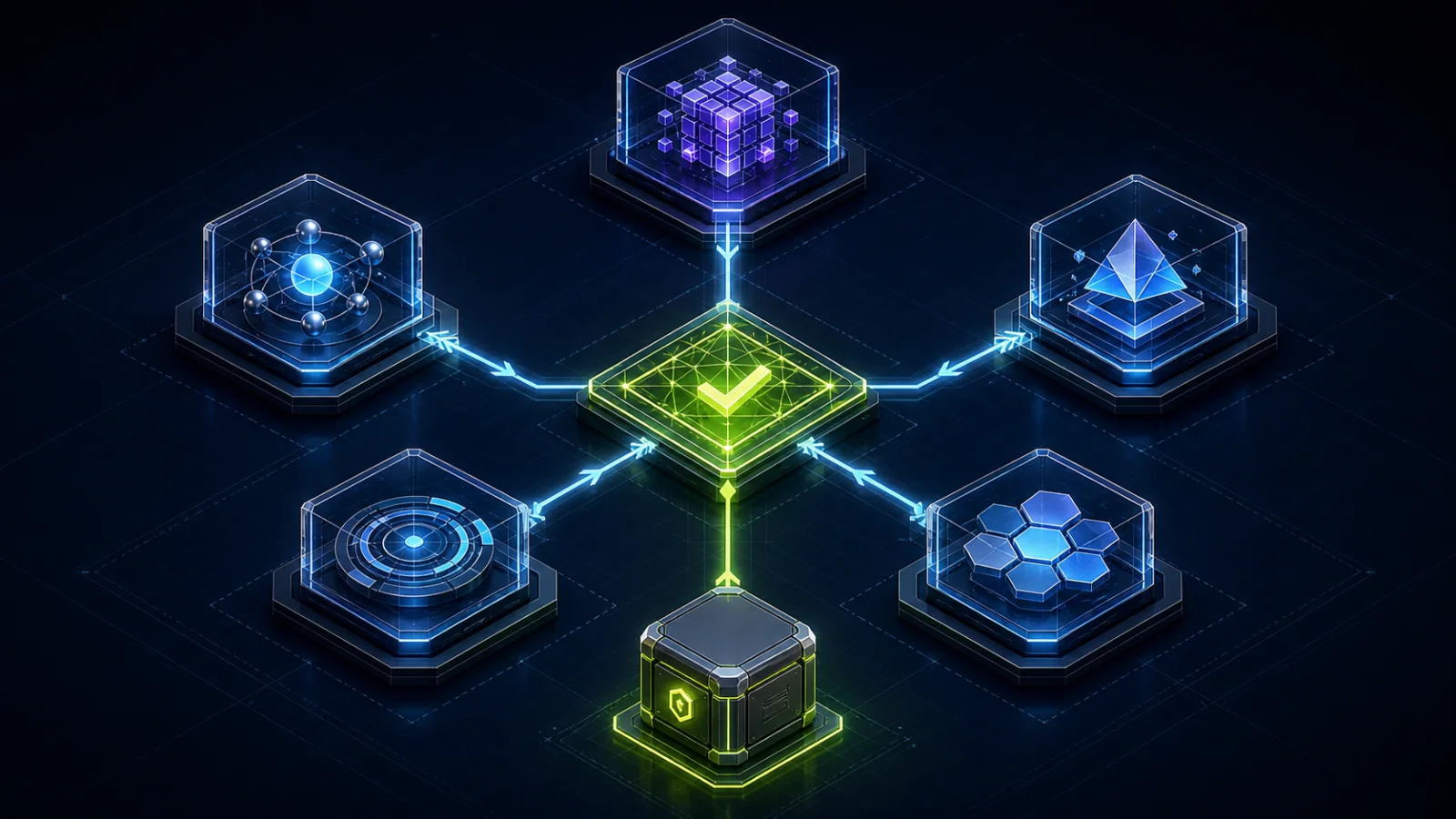
🧩 Core primitives
| Primitive | Engineering question | Typical artifact | | --- | --- | --- | | Agent node | Who owns this context, objective, capability, and permission boundary? | Role spec, runtime identity, tool allowlist | | Typed edge | What crosses this relationship, under which preconditions and schema? | Handoff contract, protocol message, artifact reference | | Org graph | Which reusable roles may coordinate, delegate, verify, or escalate? | Versioned roles-and-permissions topology | | Run/work graph | What execution structure does this particular job require? | Run-scoped DAG, event graph, trace, lineage | | Gate | What evidence allows work to advance? | Test, evaluator, quorum rule, human approval | | State boundary | What is shared, isolated, checkpointed, or authoritative? | Blackboard, artifact store, snapshot, worktree | | Graph policy | Who may create, rewrite, cancel, or route nodes and edges? | Scheduler, budget policy, topology generator |
Org graph ≠ run graph
| | Org graph | Run/work graph | | --- | --- | --- | | Describes | Stable roles, capabilities, authority, and allowed relationships | The tasks, dependencies, branches, and evidence produced in one run | | Changes | Deliberately, through architecture or policy updates | Dynamically, as planning and execution reveal new work | | Primary question | “Who may do and verify what?” | “What must happen next for this outcome?” | | Safety boundary | A planner may select permitted relationships | A planner must not silently expand its own permissions |
Org graph and run/work graph are analytical views, not standardized object types. An implementation may represent both in one runtime graph if standing authority remains distinguishable from run-specific execution.
✅ Do you need a graph?
Start with the smallest architecture that closes the quality loop. One well-instrumented agent loop is usually enough until work needs at least one of these:
- Specialization: independent roles need different context, tools, models, or permissions.
- Parallelism: separable work should fan out, then reconcile under an explicit contract.
- Independent verification: a producer should not be the only judge of its own output.
- Fault or trust isolation: failure, untrusted input, or privileged actions must be contained.
🗺️ Choose your path
| If you are… | Start with | Then inspect | | --- | --- | --- | | 🛠️ Building your first multi-agent flow | Two roles, one typed handoff, one evidence gate | Start Here → Frameworks & SDKs | | 🏗️ Designing an agent organization | Org/run separation, topology, authority, state ownership | Taxonomy → Protocols & Handoffs | | 🚦 Operating a production graph | Durable execution, traces, budgets, replay, escalation | Reliability → Observability & Cost | | 🔬 Researching adaptive systems | Foundations, benchmarks, topology optimization, limits | Research Foundations → Critiques & Limits |
🧱 The nine engineering layers

| # | Layer | The design question | | ---: | --- | --- | | 01 | Roles | Who exists, and what does each node own? | | 02 | Topology | How are the roles arranged, and why this shape? | | 03 | Handoffs | What may cross each edge, in what schema? | | 04 | Work graphs | What execution structure does this run need now? | | 05 | State | What is shared, isolated, durable, or authoritative? | | 06 | Gates | What evidence advances, rejects, or escalates work? | | 07 | Reliability | How does the graph fail, recover, replay, and stop? | | 08 | Observability & cost | Can operators explain the path, latency, and spend? | | 09 | Evolution | When and how may topology or policy redesign itself? |
The layers are concerns, not compulsory stages. A two-role pipeline with a typed handoff and a test gate can be a complete graph. Read the full taxonomy, comparison guide, and anti-patterns.
📚 Resource directory
The resource directory prioritizes primary research, official documentation, maintained projects, standards, reproducible benchmarks, and production reports. Evidence labels identify source type; they do not score quality. Each entry contains an original summary, a distinct engineering rationale, and one primary layer.
Corpus composition: 562 resources drawn from 241 distinct sources. By evidence label: 143 peer-reviewed research, 105 practitioner analysis, 109 research preprints, 69 official documentation, 62 maintained OSS projects, 37 benchmarks or datasets, 13 industry standards, 13 community resources, 11 books or courses. 294 entries were published or materially updated in 2026.
Use the interactive Resource Atlas to search and filter the same records by section, source type, evidence label, and layer.
Contents
- Start Here — 50 resources
- Research Foundations — 149 resources
- Frameworks & SDKs — 57 resources
- Protocols & Handoffs — 37 resources
- State, Memory & Artifacts — 31 resources
- Verification & Evals — 35 resources
- Reliability & Durable Execution — 37 resources
- Observability & Cost — 35 resources
- Benchmarks & Datasets — 45 resources
- Production Case Studies — 39 resources
- Critiques & Limits — 47 resources
Start Here
| Resource | Source | What it contributes | Evidence | | --- | --- | --- | --- | | 📝 A practical guide to building agents
Blog · Architecture guide | OpenAI Guides & Resources
OpenAI · 2025 | Explains when agents are appropriate, how to define their tools and instructions, and how to move from one agent to manager and handoff-based multi-agent patterns.
Why: A useful first check on whether distinct roles justify the coordination cost of a graph. | Practitioner analysis
Roles | | 📝 Building effective agents
Blog · Architecture guide | Anthropic Engineering
Erik Schluntz, Barry Zhang (Anthropic) · 2024 | The pattern vocabulary most work-graph designs are built from: prompt chaining, routing, parallelization (sectioning and voting), orchestrator-workers, and evaluator-optimizer, plus the workflow-vs-agent distinction (predefined code paths vs model-directed control). The orchestrator-workers pattern — subtasks determined by the orchestrator at runtime, not predefined — is the minimal dynamic work graph.
Why: The pattern vocabulary most work-graph designs are assembled from, and the reference practitioners actually cite. | Practitioner analysis
Topology | | 📝 From Loop Engineering to Graph Engineering?
Blog · Contemporary framing | X Articles
Carlos E. Perez · 2026 | Frames the shift as loop architecture: networks of improvement cycles that monitor, feed, constrain, and correct one another, with reliability located in their edges.
Why: Adds the grounding requirement missing from topology-only accounts: independent counter-metrics, frozen tests or rules, external anchors, and human ownership of root objectives. | Practitioner analysis
Gates | | 📄 The Five Ws of Multi-Agent Communication: Who Talks to Whom, When, What, and Why – A Survey from MARL to Emergent Language and LLMs
Paper · Communication survey | Transactions on Machine Learning Research
Jingdi Chen; Hanqing Yang; Zongjun Liu; Carlee Joe-Wong · 2026 | Synthesizes multi-agent communication across reinforcement learning, emergent language, and LLM systems through sender, recipient, timing, content, and purpose decisions.
Why: Provides a design-oriented map for engineering edge selection, message timing, payloads, grounding, scalability, and interpretability. | Peer-reviewed research
Handoffs | | 📚 Multi-Agent Reference Architecture
Docs · Production reference architecture | Microsoft
Microsoft · 2026 | Maps agent registries, communication, memory, observability, evaluation, security, governance, and deployment into an end-to-end reference architecture for multi-agent systems.
Why: Provides a broad engineering checklist grounded in customer implementations; it is evolving guidance in an official repository, not a versioned standard. | Official documentation
Topology | | 🎬 Steve Yegge on AI Agents and the Future of Software Engineering
Video · Agent-organization pre-history | The Pragmatic Engineer
Gergely Orosz, Steve Yegge · 2026 | February 10, 2026 podcast (with written companion) where Yegge lays out his eight-level agent adoption spectrum, culminating at level 8: building your own orchestrator to coordinate many agents. Captures the "you fire up another agent, then another... you can't leave" coordination pain that made programmable agent organizations feel inevitable.
Why: Lays out an adoption progression for agent organizations that gives teams a vocabulary for where they currently are. | Practitioner analysis
Roles | | 📝 Welcome to Gas Town
Blog · Agent-organization pre-history | Medium
Steve Yegge · 2026 | The January 1, 2026 essay introducing the first widely-adopted agent organization: 20-30 parallel Claude Code instances under a role hierarchy — Mayor (chief-of-staff), long-lived Crew, ephemeral swarming polecats feeding a merge queue — at a reported ~$100/hour token burn. The clearest pre-discourse instance of a stable org graph plus ephemeral work units, cited throughout the July 2026 debate.
Why: The essay that popularized running dozens of parallel coding agents under a coordinator, and the concrete origin of much later practice. | Practitioner analysis
Topology | | 🧰 loop-engineering: Practical Patterns, Starters & CLI Tools
Tool · Discourse-to-tooling | GitHub
Cobus Greyling · 2026 | Open-source repo that converted the Osmani/Cherny discourse into runnable artifacts: production loop patterns, loop-audit, loop-init, and loop-cost CLI tools that scaffold and score agent loops. Evidence of how fast the founding discourse turned into tooling — the same trajectory graph engineering began following in July 2026.
Why: Turns the loop discourse into runnable patterns and starters, which is the fastest way to get a node worth coordinating. | Maintained OSS project
Work graphs | | 📝 Context vs Prompt vs Loop vs Harness Engineering: The 2026 Stack
Blog · Engineering-stack framing | explainx.ai
explainx.ai · 2026 | The layered-stack taxonomy the graph engineering discourse extends: prompt (how do I word this message), context (what the model sees per call), loop (what autonomous workflow repeats until a goal), harness (what code runs it reliably). Graph engineering was pitched on July 18 as the fifth layer on exactly this ladder, so this is the reference frame most reactions assume.
Why: Distinguishes the neighboring dimensions cleanly, useful when a team is arguing across layers without noticing. | Practitioner analysis
Topology | | 📝 Agentic Loops: From ReAct to Loop Engineering (2026 Guide)
Blog · Loop-engineering pre-history | Data Science Dojo
Data Science Dojo · 2026 | Traces the full lineage from the 2022 ReAct paper through 2024-25 agent harnesses to the June 2026 loop-engineering moment, giving the discourse its research pedigree. Handy for readers who want the deep history of the loop layer that graph engineering composes over.
Why: Traces the lineage from early reasoning-and-acting agents to current practice, giving newcomers the arc rather than a snapshot. | Practitioner analysis
Work graphs | | 📝 Anthropic's Coding Chief Doesn't Write Prompts Anymore. He Writes Loops.
Blog · Loop-engineering pre-history | Medium
The Latency Gambler (Kanishk S.) · 2026 | One of the widest-read June 2026 amplifications of the Cherny quote, reconstructing what his loop setup actually consists of and why "the loop is the easy part" while context and stop conditions are the work. Representative of the wave of secondary coverage that carried the loops framing to a general engineering audience just before the graphs turn.
Why: Reconstructs what a working practitioner loop setup actually contains, beyond the quotable claim. | Practitioner analysis
Work graphs | | 🎬 Boris Cherny: "I don't prompt Claude anymore. I have loops prompting Claude" (clip)
Video · Loop-engineering pre-history | X
Boris Cherny (clip), shared by Paweł Huryn · 2026 | Widely-shared June 2026 clip of Claude Code's creator saying he no longer prompts Claude directly but runs loops that prompt it and figure out what to do next — the insider confirmation that pushed loop engineering from meme to practice. Cherny called it "the transition we're going to see for the rest of the year"; the multi-loop, multi-agent implications set up the graphs turn a month later.
Why: First-hand statement from the author of a widely used coding harness on why he stopped prompting directly. | Practitioner analysis
Work graphs | | 📝 Demystifying Loop Engineering: Get More From AI Agents, Avoid Loopmaxxing
Blog · Loop-engineering pre-history | TechTalks
TechTalks (bdtechtalks.com) · 2026 | June 22, 2026 explainer that added the discourse's main cautionary term, "loopmaxxing" — over-automating loops past the point of verification. Its warnings about unverified autonomous cycles carry directly into graph engineering, where the failure mode compounds across every node in the organization.
Why: Introduces a useful cautionary term for over-automating work that did not need it, a failure mode that scales badly into graphs. | Practitioner analysis
Reliability | | 📝 Introducing Loop Engineering
Blog · Loop-engineering pre-history | Medium
Valentina Alto · 2026 | July 2026 essay framing loop engineering as the emerging human-agents interaction model rather than a coding trick — one of the last substantial loops-era pieces published in the days before the graphs pivot, useful for seeing exactly what the discourse looked like at the moment it shifted.
Why: Frames the shift as an interaction model between humans and agents rather than a coding trick, which is the right altitude for org design. | Practitioner analysis
Roles | | 📝 Loop Engineering: Designing Loops That Prompt Coding Agents
Blog · Loop-engineering pre-history | addyosmani.com
Addy Osmani · 2026 | The June 7, 2026 essay (republished by O'Reilly Radar on June 22) that named and structured loop engineering: five components — automations, worktrees, skills, plugins/MCP connectors, and subagents — plus external state so progress survives between runs. The subagents-and-external-state sections are where the essay already reaches toward multi-agent graph structure, making it the immediate intellectual substrate of graph engineering.
Why: The essay that structured the loop layer into named components, and the substrate every graph node sits on. | Practitioner analysis
Work graphs | | 📝 Peter Steinberger: "You should be designing loops that prompt your agents"
Blog · Loop-engineering pre-history | X
Peter Steinberger (@steipete) · 2026 | The June 2026 post (~6.5M views) that made loop engineering a mass movement: "you shouldn't be prompting coding agents anymore, you should be designing loops that prompt your agents." The direct ancestor of the July graphs post — graph engineering is explicitly framed as the layer above this idea.
Why: The post that moved the field from prompting to designing systems that prompt, and the direct ancestor of the coordination discourse. | Practitioner analysis
Work graphs | | 📝 Prompt Engineering Is Dead. Long Live Loop Engineering
Blog · Loop-engineering pre-history | HackerNoon
Fractera · 2026 | The succession-framing piece whose title became shorthand for how each layer of the engineering stack dethrones the last — the same rhetorical template the graph engineering discourse reused three weeks later ("loop engineering is dead, long live graph engineering" jokes in the July 18 replies trace here).
Why: Useful as a record of how each layer of the stack reframes the one below, including the hype that comes with it. | Practitioner analysis
Topology | | 📝 Stop Prompting AI and Start Building Loops
Blog · Loop-engineering pre-history | Product Market Fit
Product Market Fit (Substack) · 2026 | Newsletter breakdown of Boris Cherny's loops-not-prompts shift, unpacking the 16-minute source interview into the working parts: the context, the stop condition, the budget cap, and the verifiable target. Useful as the most careful secondary account of what Cherny actually described versus what the viral quote implied.
Why: Unpacks a viral claim into its working parts: context, stop condition, budget cap, and verifiable target. | Practitioner analysis
Reliability | | 🧭 AgenticOrgChart.com: AI Agent Org Chart Patterns
List · Topology patterns | agenticorgchart.com
agenticorgchart.com · 2026 | Vendor-neutral reference documenting seven canonical multi-agent topologies — single agent, supervisor, hierarchical, human-in-the-loop, and others — each with cited public production examples. The closest thing the young field has to a pattern catalog for org graphs, published before the term existed.
Why: A vendor-neutral catalog of canonical topologies, handy for naming the shape you are already building. | Community resource
Topology | | 📝 Shubham Saboo: SKILL graphs for a six-agent team
Blog · Two-graph precursor | X
Shubham Saboo (@SabooShubham_) · 2026 | Early-2026 precursor to Saboo's two-graph framing quoted in the founding discourse: he describes running a team of six agents, each with a SOUL file, memory files, and a traversable graph of skill docs, coordinating through shared files. Concrete example of graph-shaped shared knowledge serving a standing agent organization rather than a retrieval pipeline.
Why: A concrete early example of graph-shaped shared knowledge serving a standing agent team rather than a retrieval pipeline. | Practitioner analysis
State | | 📝 The Shift from Models to Compound AI Systems
Blog · Compound-systems economics | Berkeley AI Research blog
Matei Zaharia, Omar Khattab, Lingjiao Chen et al. · 2024 | The essay that reframed AI engineering as system design over budgets: tripling model training spend might buy 30%→35% on coding, while a sample-test-filter system reaches 80% with existing models, so builders must allocate latency, cost, and compute budgets across components. The economic argument underneath the whole engineering stack that graph engineering now sits atop.
Why: Reframes AI engineering as system design over budgets, which is the premise the whole coordination layer rests on. | Practitioner analysis
Topology | | 📝 Are we still talking loops or did we shift to graphs yet?
Blog · Founding discourse | X
Peter Steinberger · 2026 | The July 2026 post that pushed the discourse from loop engineering to graph engineering: one line asking whether single-agent loops are already obsolete as the unit of design. Its virality reframed planning and decomposition as the question of what work graph your agents should form per task.
Why: The post that named the shift from loops to graphs, and the entry point to the whole coordination discourse. | Practitioner analysis
Topology | | 📝 Graph Engineering: Designing Multi-Agent Organizations
Blog · Work graph vs org graph | explainx.ai
Yash Thakker · 2026 | Canonical framing article (July 18, 2026) separating the stable org graph of long-lived agents from the ephemeral work graph whose task nodes split, merge, reorder, or disappear as evidence arrives. Argues graphs force you to declare every node, edge, and failure mode that loops let you defer.
Why: The framing article that separates the standing org graph from the per-run work graph, which is the field's most useful distinction. | Practitioner analysis
Topology | | 🧭 Awesome Harness Engineering
List · Adjacent curated lists | GitHub
ai-boost · 2026 | Curated resources for the harness layer directly beneath agent organizations: agent loops, context management, tool design, MCP and skills, permissions, memory, verification, observability, sandboxing, and reference implementations, at roughly 3.3k stars.
Why: The neighbouring layer's catalog, useful when a graph problem turns out to be a single node's harness problem. | Community resource
Reliability | | 🧭 Awesome Loop Engineering
List · Adjacent curated lists | GitHub
Chaoyue He · 2026 | Sibling list covering the loop layer: 874 resources, 22 operational patterns, 22 loop contracts, and 8 runtime starters for recurring agent systems, plus an interactive atlas and a structured dataset. 46 stars, last pushed 2 Aug 2026; complements graph engineering by covering the time axis (re-triggering, supervision) where this list covers the org axis.
Why: The sibling catalog for the loop layer beneath this one, where a single node's behavior cycle is designed. | Community resource
Work graphs | | 🧭 Awesome Agentic Engineering
List · Adjacent curated lists | GitHub
Jordi Mas · 2026 | Practitioner-oriented list of agentic engineering resources, weighted toward coding agents, MCP, AGENTS.md, and team workflow patterns rather than research papers. 97 stars, last pushed 27 Jun 2026.
Why: A practitioner-oriented catalog of agentic engineering resources adjacent to this list's scope. | Community resource
Topology | | 🧭 Awesome AI Agents (e2b)
List · Adjacent curated lists | GitHub
e2b · 2026 | The largest general inventory of autonomous agent products and projects, with use-case filters and per-project metadata. 29,223 stars, last pushed 9 Jul 2026. Mostly single-agent products — use it for ecosystem coverage, not for coordination semantics.
Why: One of the broadest agent catalogs, useful for finding tools this list deliberately does not carry. | Community resource
Topology | | 🧭 Awesome AI Agent Papers
List · Adjacent curated lists | GitHub
VoltAgent · 2026 | Weekly-refreshed arXiv digest restricted to papers published from January 2026 onward, bucketed into multi-agent coordination, memory/RAG, tooling, evaluation/observability, and security. 1,646 stars, last pushed 3 Jul 2026. The coordination bucket is the directly relevant slice.
Why: A running collection of agent research papers, useful as a feed for what to evaluate next. | Community resource
Topology | | 🧭 Awesome LLM-Powered Agent
List · Adjacent curated lists | GitHub
Yupeng Hou · 2025 | Long-running academic reading list on LLM-powered agents with a dedicated multi-agent-collaboration section. 2,255 stars, but effectively dormant — last push 30 Apr 2025, so it misses the entire 2025-2026 orchestration wave. Useful for pre-2025 lineage only.
Why: An academic reading list on LLM-powered agents, complementing the engineering emphasis here. | Community resource
Topology | | 🧭 Awesome Graphs Meet Agents
List · Disambiguation | GitHub
Yuanchen Bei et al. · 2026 | Companion list to the survey "Graphs Meet AI Agents," covering graph-empowered agents (planning, memory, coordination over graph data) and agent-assisted graph learning. 169 stars, last pushed 28 Jul 2026. Included as the key disambiguation reference: this is graph-DATA-meets-agents, not multi-agent org topology.
Why: The graph-data-meets-agents list, and the clearest reference for the boundary this project draws around its own name. | Community resource
State | | 🧭 Awesome MCP Servers
List · Adjacent curated lists | GitHub
Frank Fiegel · 2026 | The de facto directory of Model Context Protocol servers, at roughly 91.7k stars and 13.8k forks. Relevant as the tool-edge inventory: MCP servers are what nodes in an agent graph reach for, distinct from the agent-to-agent edges themselves.
Why: The registry practitioners actually use to find tool-edge servers, which is where most handoff surface now lives. | Community resource
Handoffs | | 🎓 Hugging Face Agents Course
Course · Courses and MOOCs | Hugging Face
Hugging Face · 2026 | Free five-unit course covering agent fundamentals, then smolagents, LangGraph, and LlamaIndex, with a unit on multi-agent collaboration and a leaderboard-graded final assignment. Two certificate tiers; the companion repo has 30,592 stars and was last pushed 30 Jun 2026.
Why: A free hands-on course that gets someone to a working agent before they attempt an organization of them. | Book/course
Roles | | 🎓 Berkeley Agentic AI MOOC (CS294/194-196)
Course · Courses and MOOCs | UC Berkeley RDI
Dawn Song, Xinyun Chen · 2025 | Free lecture series with a 32K+ learner community (about 40K counting the earlier Advanced LLM Agents run), with dedicated sessions on multi-agent AI systems, post-training verification, agent evaluation, and safety. Slides and recordings stay public; the Fall 2025 page is the current edition and no Spring/Fall 2026 edition is linked as of Aug 2026.
Why: University-level lectures covering agent systems, with material on coordination rather than only single-agent tricks. | Book/course
Topology | | 🎓 Multi AI Agent Systems with crewAI
Course · Courses and MOOCs | DeepLearning.AI
João Moura, DeepLearning.AI · 2026 | Three-hour, 18-lesson beginner course on assigning specialized roles to agents and coordinating them in series, parallel, and hierarchical structures, with error handling and loop prevention. Applied to six business processes; free during the DeepLearning.AI platform beta.
Why: A short course on role-based crews, the fastest path to a first working multi-agent design. | Book/course
Roles | | 🎓 Introduction to LangGraph (LangChain Academy)
Course · Courses and MOOCs | LangChain Academy
LangChain · 2026 | Free six-module, 55-lesson (~6 hour) course on LangGraph as an explicit graph of nodes and edges: state, memory, human-in-the-loop interrupts, long-term memory, and deployment. The closest thing to a canonical hands-on course on programmable agent topology.
Why: The vendor course for graph-native orchestration, covering state and control flow rather than prompt tricks. | Book/course
Work graphs | | 🎓 AI Evals for Engineers & PMs
Course · Courses and MOOCs | Maven
Hamel Husain, Shreya Shankar · 2026 | Paid cohort course that has trained 2,000+ engineers and PMs, including teams at OpenAI and Anthropic; material fully refreshed for the September 2026 cohort. Covers error analysis on agentic traces (tool calls, retrieval) and validating LLM-as-judge against expert labels — the measurement half of running a multi-agent org.
Why: Evaluation practice aimed at engineers, which is the skill an agent-organization gate depends on. | Book/course
Gates | | 📚 AAMAS 2027 — 26th International Conference on Autonomous Agents and Multiagent Systems
Docs · Conferences and workshops | IFAAMAS
IFAAMAS; general chairs William Yeoh and Neil Yorke-Smith · 2027 | The field's primary academic venue, 3-7 May 2027 in Hanoi, Vietnam, with a call explicitly naming generative and agentic AI alongside established agent topics. The preceding AAMAS 2026 (Paphos, Cyprus, 25-29 May 2026) drew 1,455 main-track full-paper submissions, roughly 50% above any prior year.
Why: The long-running academic venue for autonomous agents and multi-agent systems, where much of this theory is still developed. | Official documentation
Topology | | 📚 AI Engineer World's Fair 2026
Docs · Conferences and workshops | AI Engineer
swyx and the AI Engineer team · 2026 | Largest practitioner conference for AI engineers: 29 June - 2 July 2026 at Moscone Center, San Francisco, with 6,000+ attendees, 300+ speakers, and 10 parallel tracks including agent orchestration, evaluation, sandbox/platform engineering, memory and continual learning, and context engineering. Talks are posted publicly to YouTube after the event.
Why: The practitioner conference where agent-engineering patterns are presented before they reach papers. | Official documentation
Topology | | 📚 Interrupt 2026 — The Agent Conference by LangChain
Docs · Conferences and workshops | LangChain
LangChain · 2026 | Vendor-run but production-focused agent conference: two days in San Francisco (13-14 May 2026), plus NYC on 24 September and London on 13 October 2026. Heavy on real-team case studies of agents in production; LangChain used the 2026 SF edition to ship LangSmith Engine, Managed Deep Agents, SmithDB, and Context Hub.
Why: A conference dedicated to agent engineering, run by a framework author, useful for tracking where tooling is heading. | Official documentation
Topology | | 📚 Agentic AI Summit 2026 (Berkeley RDI)
Docs · Conferences and workshops | UC Berkeley RDI
Berkeley Center for Responsible, Decentralized Intelligence · 2026 | Academic-industry summit at UC Berkeley on 1-2 August 2026, expecting 5,000+ in-person attendees plus a global livestream, spanning foundation models, agent frameworks, evaluation, infrastructure, and deployment. Speakers include Sergey Levine, Ion Stoica, Dawn Song, Andrej Karpathy, Wojciech Zaremba, Ali Ghodsi, and Andrew Ng.
Why: An academic-industry summit on agentic AI, with material on coordination and safety. | Official documentation
Topology | | 📚 Who Verifies the Agents? — NeurIPS 2026 Workshop
Docs · Conferences and workshops | NeurIPS 2026, Sydney
Organizers from UC Berkeley, MIT-IBM Watson AI Lab, Stanford, Meta · 2026 | Workshop on verification as the bottleneck for reliable agent systems, 11-12 December 2026 in Sydney; submissions of 4-9 pages due 29 August 2026 on OpenReview. Explicit tracks on meta-agents, self-improving systems, and scalable oversight of long-horizon behavior — i.e. the verification edges in an agent graph.
Why: A workshop specifically about verifying agents, which is the unsolved half of agent-organization design. | Official documentation
Gates | | 📚 LaMAS 2026 — LLM-based Multi-Agent Systems workshop at AAAI-26
Docs · Conferences and workshops | AAAI-26, Singapore
LaMAS organizing committee · 2026 | Held 27 January 2026 at Singapore EXPO, subtitled "Towards Responsible, Reliable, and Scalable Agentic Systems." The call names organization and coordination of multiple LLM agents as a first-class topic alongside emergent-behavior evaluation and safety — the closest venue match to graph engineering's core question. Accepted papers remain linked from the site.
Why: A workshop dedicated to LLM-based multi-agent systems, the closest academic venue to this list's subject. | Official documentation
Topology | | 📚 Agents in the Wild: Safety, Security, and Beyond (2nd workshop, ICML 2026)
Docs · Conferences and workshops | ICML 2026, Seoul
Agents in the Wild organizers · 2026 | Held 11 July 2026 in Hall B2, Seoul, on agents reasoning and acting safely in open-ended environments; multi-agent coordination and long-horizon safety is an explicitly welcomed topic. Submission deadline was 8 May 2026, so the current value is the accepted-paper list.
Why: A workshop on agent safety and security in deployment, where failures across edges get examined. | Official documentation
Reliability | | 📚 Model Context Protocol — Contributor Communication and Working Groups
Docs · Communities and forums | Model Context Protocol / Agentic AI Foundation
MCP core maintainers · 2026 | Official map of where MCP work actually happens: contributor Discord for working/interest groups, live calls at meet.modelcontextprotocol.io, GitHub Discussions for proposals, and SEPs submitted as PRs to the seps/ directory. Any Discord discussion leading to a decision must be moved to a GitHub Discussion or Issue for a searchable record.
Why: How the tool-edge protocol is actually governed, useful before betting an architecture on its roadmap. | Official documentation
Handoffs | | 📐 Agentic AI Foundation (AAIF), Linux Foundation
Standard · Communities and forums | Linux Foundation
Linux Foundation · 2025 | Neutral governance body formed December 2025, anchored by the Model Context Protocol (donated by Anthropic), goose (Block), and AGENTS.md. Launched with 150+ member organizations, described as the fastest-growing foundation in Linux Foundation history; A2A, donated by Google in June 2025, sits alongside it.
Why: Neutral governance for agent infrastructure, which determines whether protocol choices stay portable. | Industry standard
Handoffs | | 📐 AGNTCY — the Internet of Agents collective
Standard · Communities and forums | Linux Foundation / AGNTCY
Cisco, LangChain, Galileo and contributors · 2026 | Open-source collective, now part of the Linux Foundation, building the cross-vendor plumbing for agent collaboration: a federated agent-discovery registry, a network-level agent messaging protocol, an identity/verification layer, and multi-agent observability collectors. Supporting orgs include LlamaIndex, Glean, AG2, Traceloop, MongoDB, and Weaviate.
Why: A cross-vendor collective for agent interoperability, worth tracking if your nodes span organizations. | Industry standard
Handoffs | | 📝 Agentic AI Weekly (Berkeley RDI)
Blog · Newsletters, blogs and podcasts | Substack
Berkeley Center for Responsible, Decentralized Intelligence · 2026 | Weekly research-leaning roundup from the group behind the Berkeley Agentic AI MOOC and the AgentX-AgentBeats competition (1,300+ teams across 100+ countries, $1M+ in prizes, Phase 2 launched 23 February 2026). Consistent academic coverage of coordination and evaluation that practitioner newsletters skip.
Why: A weekly digest from an academic center, a lower-noise way to track the field than social feeds. | Practitioner analysis
Topology | | 📝 Latent Space: The AI Engineer Podcast and Newsletter
Blog · Newsletters, blogs and podcasts | Substack
swyx, Alessio Fanelli · 2026 | 194,000+ subscribers and 217 episodes as of late July 2026, with recurring deep dives on multi-agent orchestration — including a 7 April 2026 episode on Symphony, OpenAI's internal Elixir-based layer for spinning up, supervising, and coordinating large fleets of coding agents across tickets and repos.
Why: The podcast and newsletter where practitioners describe agent architectures before they are written up. | Practitioner analysis
Topology | | 📝 Anthropic Engineering blog
Blog · Newsletters, blogs and podcasts | Anthropic
Anthropic engineering teams · 2026 | First-party writeups of production agent architecture, including "How we built our multi-agent research system" (13 Jun 2025, orchestrator-worker with parallel subagents), "Building a C compiler with a team of parallel Claudes" (5 Feb 2026), "Harness design for long-running application development" (24 Mar 2026), and "Scaling Managed Agents: Decoupling the brain from the hands" (8 Apr 2026).
Why: The first-party engineering blog behind several of the production accounts in this catalog. | Practitioner analysis
Roles | | 📝 3 Years of Graph Engineering with LangGraph
Blog · Framework retrospective | LangChain
Sydney Runkle, Harrison Chase · 2026 | A July 22, 2026 retrospective from the team behind the reference graph-native framework, arguing production agents need cycles rather than DAGs, that a loop is a simplified graph rather than an alternative to one, and that nodes have grown from single model calls into full agent runs. Reports 65M+ monthly downloads.
Why: The framework author's own account of what three years of building agent graphs taught them, including where the DAG mental model breaks. | Practitioner analysis
Topology |
Research Foundations
| Resource | Source | What it contributes | Evidence | | --- | --- | --- | --- | | 📄 Agent-Oriented Programming
Paper · Agent foundations | Artificial Intelligence
Yoav Shoham · 1993 | Defines a programming paradigm in which agents are first-class components described through mental state and governed by explicit interaction rules.
Why: Establishes the intellectual lineage for treating an agent role as a programmable organizational unit. | Peer-reviewed research
Roles | | 📄 Intelligent Agents: Theory and Practice
Paper · Agent foundations | The Knowledge Engineering Review
Michael Wooldridge; Nicholas R. Jennings · 1995 | Surveys the properties, architectures, and engineering approaches that distinguish autonomous agents from ordinary software modules.
Why: Grounds the agency-at-the-nodes boundary that separates an agent graph from a deterministic workflow. | Peer-reviewed research
Roles | | 📄 The Blackboard Model of Problem Solving and the Evolution of Blackboard Architectures
Paper · Shared-state architectures | AI Magazine
H. Penny Nii · 1986 | Describes systems in which independent specialists coordinate opportunistically through a shared problem state and a control component.
Why: Supplies a durable model for shared state without requiring every node to exchange its full context directly. | Peer-reviewed research
State | | 📄 Learning to Communicate with Deep Multi-Agent Reinforcement Learning
Paper · Learned communication | NeurIPS
Jakob Foerster; Ioannis Alexandros Assael; Nando de Freitas; Shimon Whiteson · 2016 | Introduces reinforcement-learning methods that let agents learn communication protocols alongside their task policies, including discrete messages for execution.
Why: Shows that edge content and communication policy can be engineered or learned rather than treated as free-form chat. | Peer-reviewed research
Handoffs | | 📄 TarMAC: Targeted Multi-Agent Communication
Paper · Learned communication | ICML
Abhishek Das et al. · 2019 | Uses attention to let agents address different messages to selected recipients instead of broadcasting the same information to the whole team.
Why: Motivates selective, recipient-aware handoffs when all-to-all communication is wasteful or distracting. | Peer-reviewed research
Handoffs | | 📄 AutoGen: Enabling Next-Gen LLM Applications via Multi-Agent Conversations
Paper · LLM multi-agent systems | COLM
Qingyun Wu; Gagan Bansal; Jieyu Zhang; Yiran Wu; Beibin Li; Erkang Zhu; Li Jiang; Xiaoyun Zhang; Shaokun Zhang; Jiale Liu; Ahmed Hassan Awadallah; Ryen W. White; Doug Burger; Chi Wang · 2024 | Presents a framework for composing customizable conversational agents that can combine language models, tools, code execution, and human input.
Why: An early, influential demonstration that agent roles and conversation links can be expressed as an executable topology. | Peer-reviewed research
Topology | | 📄 GPTSwarm: Language Agents as Optimizable Graphs
Paper · Topology optimization | ICML
Mingchen Zhuge et al. · 2024 | Represents language-agent systems as computational graphs and optimizes graph components from task feedback.
Why: Makes the graph itself an optimization target rather than a fixed orchestration diagram. | Peer-reviewed research
Evolution | | 📄 A Dynamic LLM-Powered Agent Network for Task-Oriented Agent Collaboration
Paper · Dynamic topology | COLM
Zijun Liu et al. · 2024 | Constructs task-specific collaboration networks that can vary which agents participate and how they communicate instead of relying on one fixed team.
Why: Provides evidence for adapting the work graph to the task while keeping the available agent roles reusable. | Peer-reviewed research
Evolution | | 📄 Cut the Crap: An Economical Communication Pipeline for LLM-based Multi-Agent Systems
Paper · Communication efficiency | ICLR
Guibin Zhang, Yanwei Yue, et al. · 2025 | First paper to formally define communication redundancy in LLM multi-agent pipelines, then one-shot prunes the spatial-temporal message-passing graph. Matches state-of-the-art topologies at $5.6 vs $43.7 cost, cuts 28-73% of tokens as a drop-in for existing frameworks, and incidentally defends against message-injection attacks — the canonical 'sparser edges are often free' result.
Why: Defines communication redundancy formally, then removes it, which is the rare optimization that helps quality and cost together. | Peer-reviewed research
Observability & cost | | 📄 G-Designer: Architecting Multi-agent Communication Topologies via Graph Neural Networks
Paper · Topology optimization | ICML
Guibin Zhang et al. · 2025 | Uses graph neural networks to design communication structures for multi-agent systems instead of assuming a complete or manually chosen graph.
Why: Connects task performance to explicit topology search and exposes communication structure as an engineering variable. | Peer-reviewed research
Evolution | | 📄 Automated Design of Agentic Systems
Paper · Automated agentic system design | ICLR
Shengran Hu; Cong Lu; Jeff Clune · 2025 | Formulates the automated invention of entire agentic systems (prompts, control flow, multi-agent structure) as search in code space: a Meta Agent Search loop programs new agent designs conditioned on an archive of prior discoveries. Discovered designs beat hand-crafted state-of-the-art agents and transfer across domains and models, establishing 'design the designer' as a research agenda.
Why: Demonstrates automated search over coordination logic while retaining executable artifacts that engineers can inspect. | Peer-reviewed research
Evolution | | 📄 AFlow: Automating Agentic Workflow Generation
Paper · Workflow search | ICLR
Jiayi Zhang et al. · 2025 | Searches over reusable workflow operators to generate task-specific agentic workflows and improve them from evaluation results.
Why: Offers a concrete method for evolving work graphs against measurable objectives rather than intuition alone. | Peer-reviewed research
Evolution | | 📄 Multi-Agent Design: Optimizing Agents with Better Prompts and Topologies
Paper · Joint prompt-topology optimization | ICLR
Han Zhou, Xingchen Wan, Ruoxi Sun, Hamid Palangi, Shariq Iqbal, Ivan Vulić, Anna Korhonen, Sercan Ö. Arık (Google / Cambridge) · 2026 | Google's three-stage Multi-Agent System Search: block-level prompt optimization, then topology optimization over a pruned configurable space, then workflow-level prompt optimization. Its headline empirical finding — most topology configurations hurt, and prompt quality dominates topology choice unless both are optimized together — is a core calibration result for anyone designing agent org graphs.
Why: Optimizing prompts and topology in sequence, with evidence that the order and the interaction between them matter. | Peer-reviewed research
Evolution | | 📄 Improving Factuality and Reasoning in Language Models through Multiagent Debate
Paper · Debate and councils | ICML
Yilun Du et al. · 2024 | Tests rounds of proposal and critique among multiple language-model instances as a way to improve factual and reasoning answers.
Why: Supplies an empirical basis for debate-style gates while leaving room to examine correlated errors and added cost. | Peer-reviewed research
Gates | | 📄 **Impr
README truncated. [View on GitHub


